




While up to my elbows in weeds working in the gardens at the Lewis & Clark Interpretive Center, my mind has ample opportunity to wander. The rhythmic action of dislodging a weed to grapple the land back from the wildness of nature creates a flow state. My conscious mind quiets, allowing my unconscious mind to tap into the past, and for a moment the professional and the personal intersect.
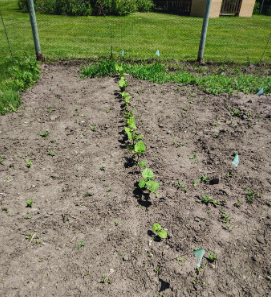
Great northern beans in the Lewis & Clark Interpretive Center’s Oscar H. Will garden. Our gardens provide a tactile way to share more of our historical content with visitors. The Mandans and Hidatsas were agricultural civilizations; this is an example of what they grew.
The history of many North Dakotans is held in the soil. My German Russian ancestors came to this area with the hope of building a future—a hope carried in seeds and a future held in the crops and produce these seeds would become. They looked to the harvest to sustain themselves and future generations.
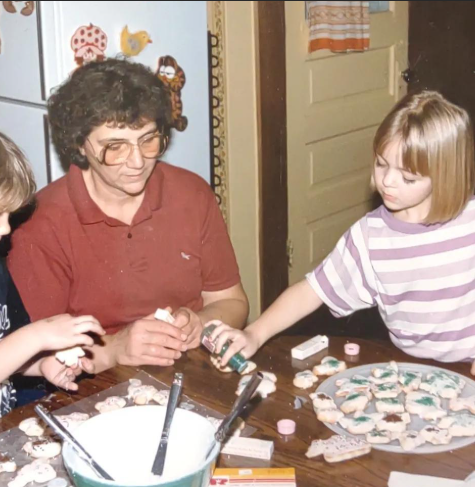
Four-year-old me makes Christmas cookies with my grandmother. Christmas never saw an empty cookie plate.
I could not help but connect my weeding at the Interpretive Center with my grandmothers in their huge gardens and kitchens—saving, storing, canning, and putting by for the coming winters—and my grandfathers out in the fields growing wheat that would be milled for bread. They would gaze at the sky to read the weather, touch the soil to diagnose the conditions.
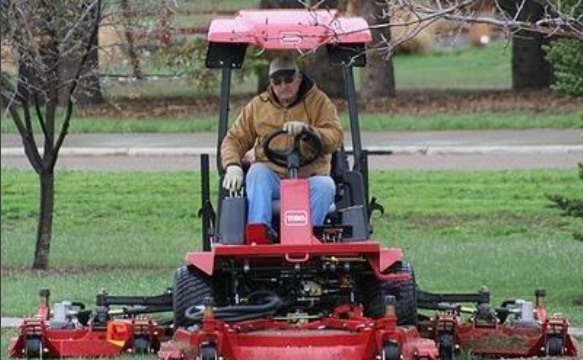
You can take the farmer off the farm, but you can’t keep him away from tractors. My grandfather loved “cutting hay” even in his later career working for Dickinson’s park board.
I found myself scanning the skies and crumbling the dirt between my fingertips. I found myself whispering words of encouragement to the seedlings and sprouts I was defending from the thistles and creeping Jenny. I found myself echoing generations of the last 150 years.
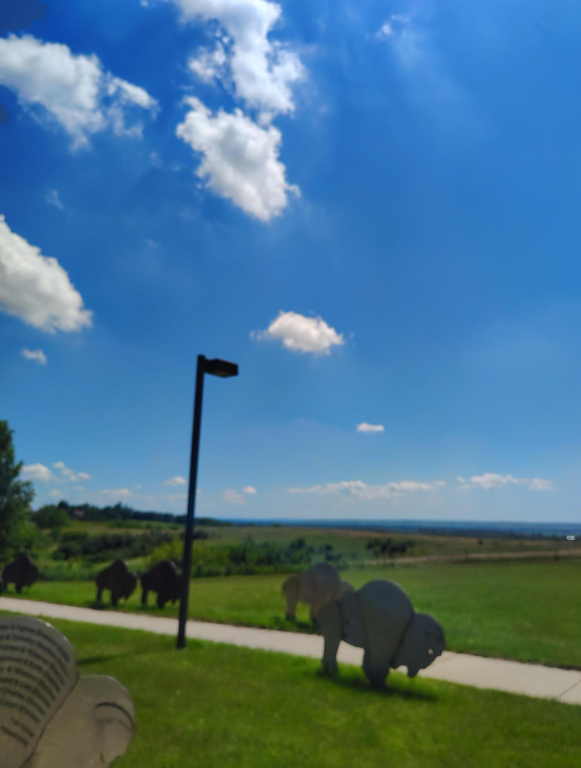
The North Dakota sky draws you in and transports you through time. Notice the vistas and clouds forming on the horizon beyond the Lewis & Clark Interpretive Center: pure magic.
North Dakota may have a reputation of harshness, but it forges within all who grow here a hardiness that can weather every extreme. I often joked with my grandparents that despite all the places they could have chosen to make their lives, they picked, or chose to stay in, North Dakota. But they grew where they were planted, and their resilience in the face of uncertainty was passed down through the generations like my grandfather’s blue eyes.
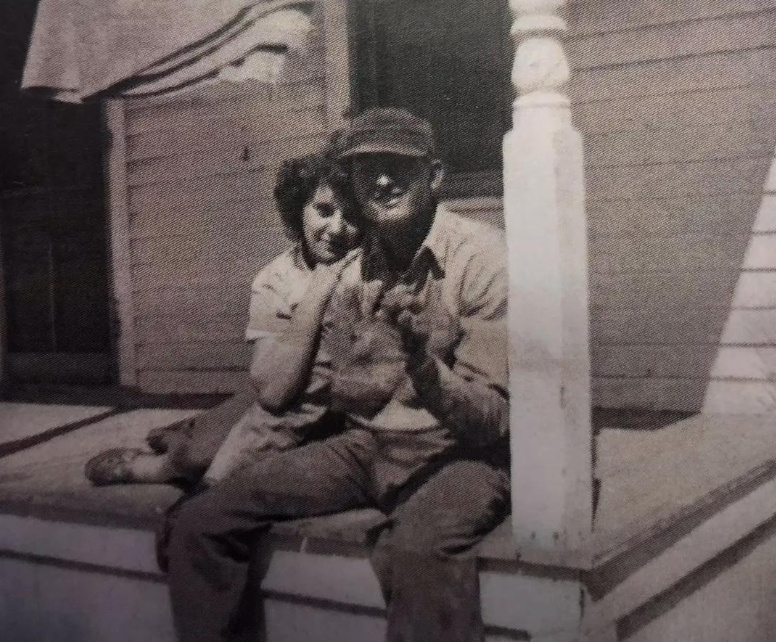
The lives my grandparents lived wove a thread into the tapestry of my history, my present, and my future. Their endurance, resilience, patience, and love resonate through all their descendants. Theirs was a legacy of stewardship, and we will carry that legacy through every generation that follows.
We’ve all been shaped and sustained by the land on which we live. We’re all building our lives and our futures from the ground up. The challenges we face year after year are a testament to the abundance of potential here. Facing the weeds and finding the future happening in real time each time I pick up my trowel at the Interpretive Center brings a definite feeling of humbling satisfaction. It transports me back to the hope of my ancestors breaking ground for the first time, the sweetness of the jams canned through the years, and the taste of the fresh bread. The weeds make the bounty more significant and the flavors of success all the richer.