Backstage Pass to North Dakota History

This blog takes you behind the scenes of the State Historical Society of North Dakota. Get a glimpse at a day-in-the-life of the staff, volunteers, and partners who make it all possible. Discover what it takes to preserve North Dakota's natural and cultural history.

A Closer Look: Dakota Territory’s 1885 Census

In 1889, when North Dakota and South Dakota became states, the governmental records of Dakota Territory were split between the two. Each state received different parts of these records, but all were to be kept, protected, and accessible. Recently, the State Historical Society of North Dakota and the University of South Dakota partnered to virtually reunite territorial records and to create better access to them. We received a National Endowment for the Humanities grant to do so. Soon researchers will be able to view all these collections easily and from anywhere.
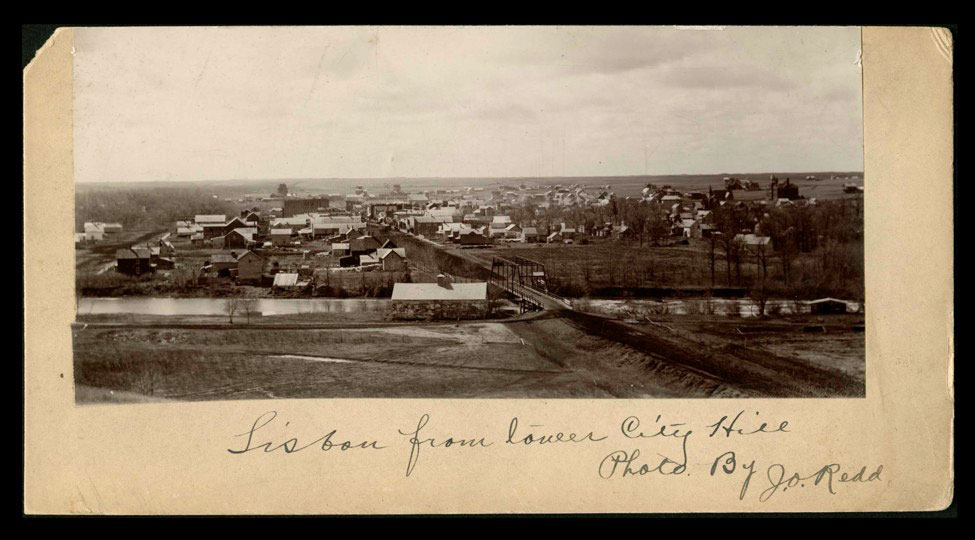
The growing community of Lisbon shortly after the territorial census, circa 1890. SHSND SA B0009-00001

Amid the many interesting notes, correspondence, and other official documents held within these collections is information regarding the 1885 territorial census.

The 1885 territorial census was authorized through federal legislation in 1879. While establishing that a census be taken every 10 years, this legislation also made provisions for U.S. territories to conduct a census in between national censuses, partially paid for by the U.S. government. This documentation could show faster growth and opportunity in a territory, which could provide helpful support for procuring statehood, encouraging settlement and industry, and determining political delegation numbers.
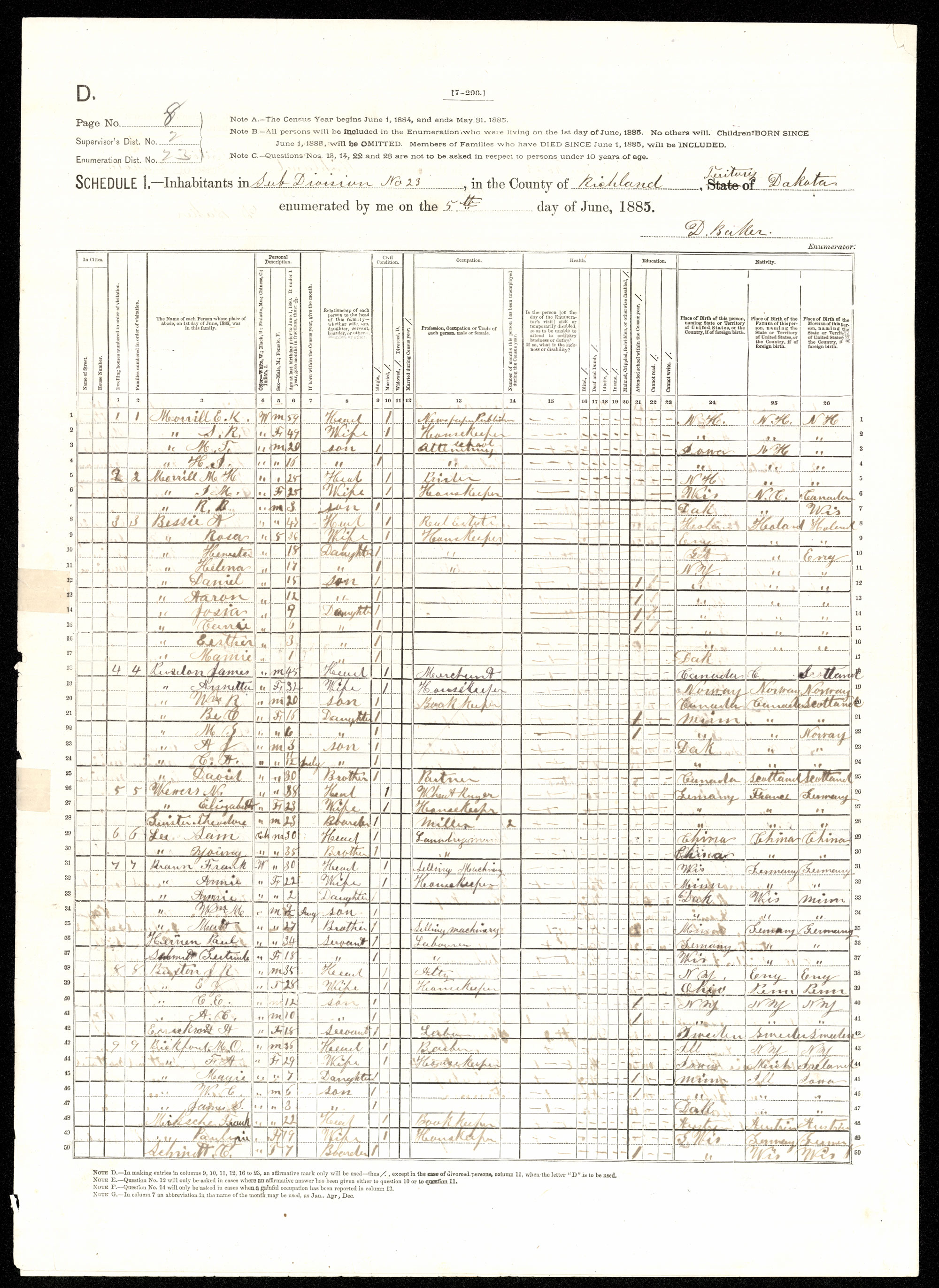
Page from the 1885 territorial census. SHSND SA State Series 30111

Dakota Territory took part in this census, and the information gathered was valuable for residents at that critical time on the cusp of statehood. The information also remains important and informative today, documenting population in an era when fewer written records were kept. Aside from counting and listing the names of inhabitants, censuses often include additional information, and the 1885 census was no exception. Enumerators, or census workers, gathered additional information on separate pages, or schedules, relating to agricultural production and to industry, such as the type and amount of power used and what machinery was required. They also compiled a schedule relating to deaths that had happened in the year prior to the June 1, 1885, start of the census.
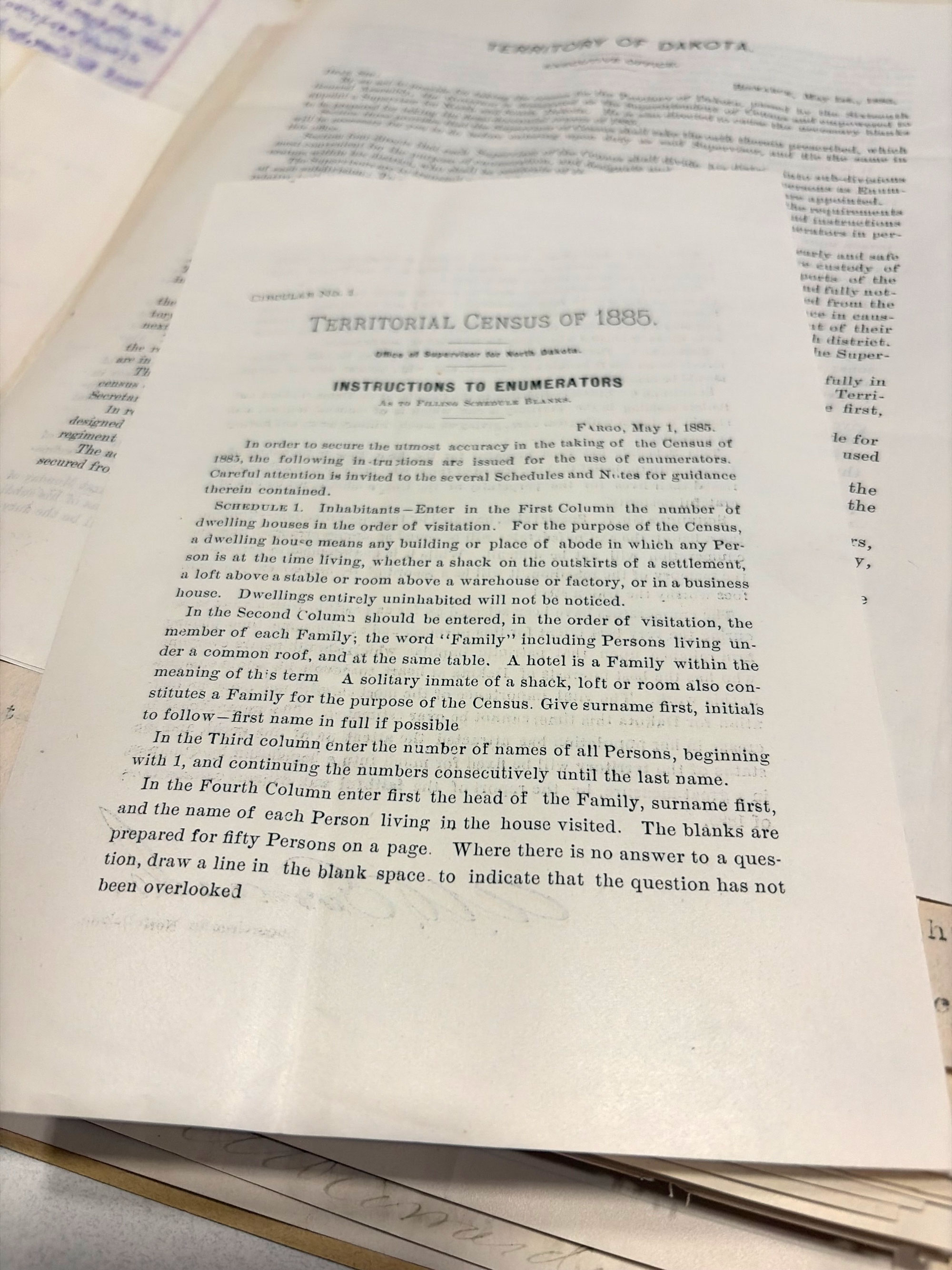
Directions to census workers on how to prepare and fill out the 1885 territorial census. SHSND SA State Series 30110

Two additional schedules were added to the mix in Dakota Territory, though these were optional to return. One documented ex-soldiers of the Union army; the other ex-soldiers of the Confederate army. As a result, the 1885 territorial census is one of the few records available in North Dakota that holds any record of the presence of former military personnel in the state.

It is worth noting that although most of the 1885 territorial censuses are located at the National Archives, the original census sheets for Dakota Territory remained within North Dakota and South Dakota. The North Dakota State Archives also retains correspondence and other information about the operation of the 1885 census. And while the census itself is a straightforward, historically interesting document, the correspondence relating to the undertaking of the census holds some surprises.

One of the most striking items I’ve found is a 13-page letter written to then-Territorial Governor Gilbert Pierce from A. W. Edwards, supervisor of the census for North Dakota. In April 1885, Edwards traveled to Washington, D.C., to figure out how the census would work—such as how much money the government would provide and the process of getting blank sheets printed. Edwards detailed the assistance, or lack thereof, and the red tape he encountered. He wrote: “I think I will know by tomorrow night as much about the census as any other man here or elsewhere. … I am satisfied that I already understand more about this than anyone in the Interior Department. The fact is, everybody seems at sea. The new officials can give no attention to any matter, and the old ones, won’t. Everybody is clever and polite and kind, but won’t give opinions, or decisions, or assistance.”
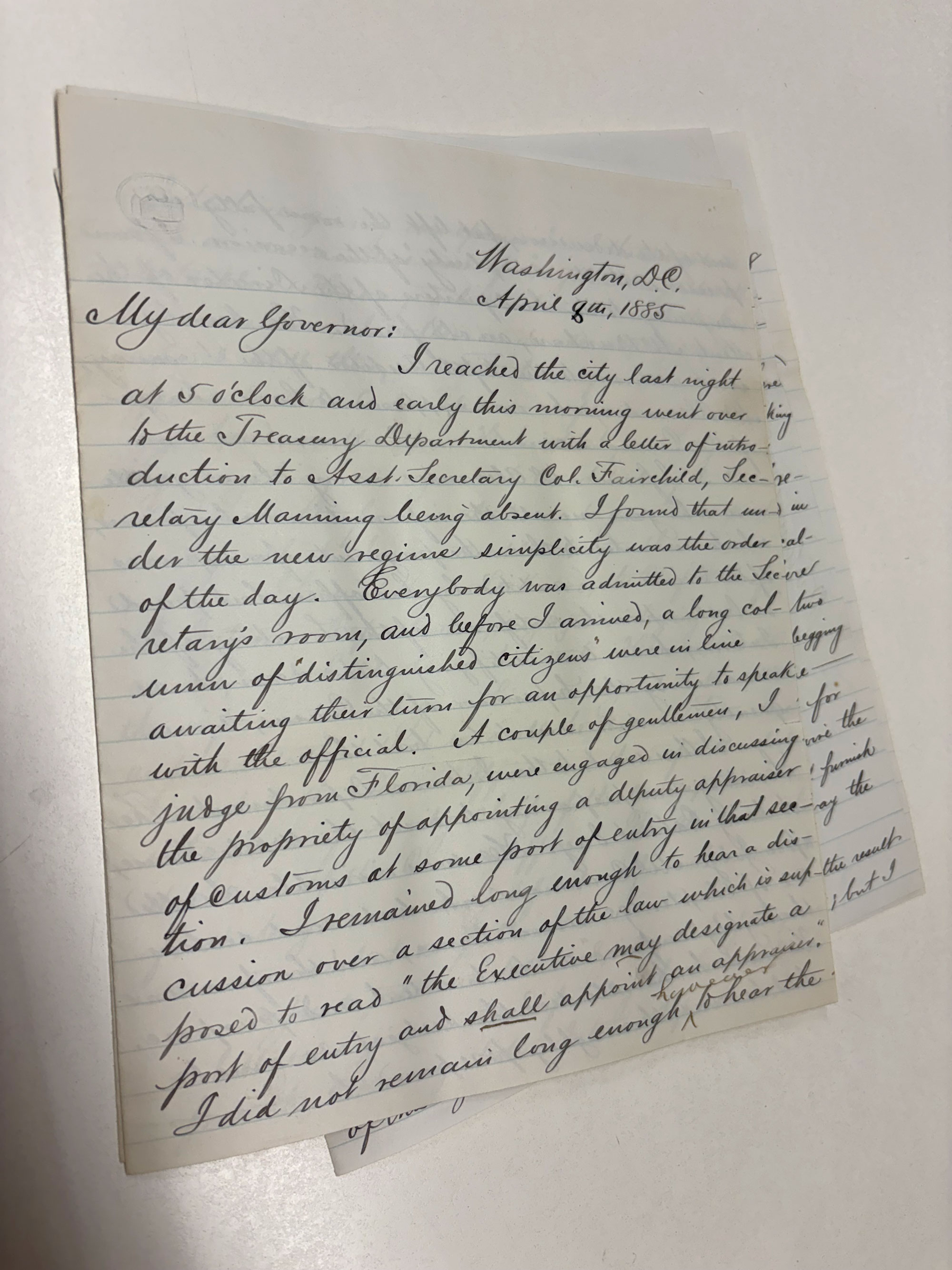
First page of A.W. Edwards’ April 1885 letter to Territorial Governor Gilbert Pierce. SHSND SA State Series 30110

With a little help from some old friends and a bit of luck—as well as adopting a hands-on approach when able—Edwards found what he needed. But according to his letter, he was one of the few. He even mentioned that the census supervisor from Colorado spent almost two weeks unsuccessfully trying to find answers to his questions there. Edwards, with his new knowledge, planned to have the Department of the Interior send wires to the various other appointed “supervisors of the different states that they will furnish blanks … and in that way the government printer will do the whole job.”

Edwards did not mean for this letter to be placed “on file as an official document, as it is not intended as a matter of record.” Yet that is exactly what happened—a note in red on the back of the final page of the letter states that it was “filed by Gov. Pierce.”
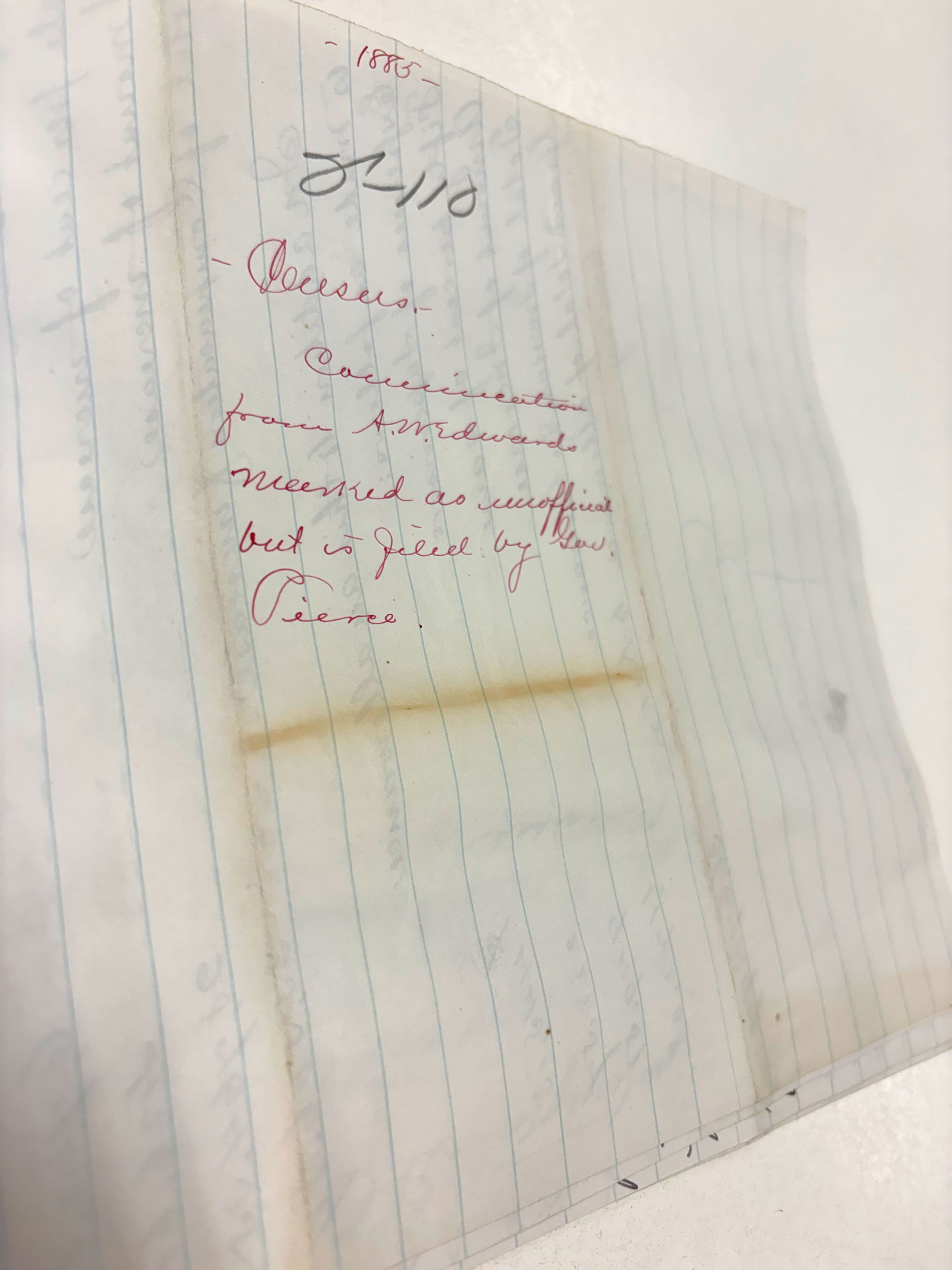
A note in red ink indicates that that A.W. Edwards’ letter was filed despite his stated wishes otherwise. SHSND SA State Series 30110

What a window into the past these documents provide us, from the banal everyday listing of who was living where to the intricacies of the inner workings of the contemporary federal government! Take a look at the 1885 census (at least partially viewable online through websites like Ancestry and FamilySearch) and reflect on how important that information was, both when it was compiled and today as we celebrate America’s 250th anniversary. These critical territorial records will definitely remain important in the future, as we prepare them for digitization and to be accessible to a new generation.
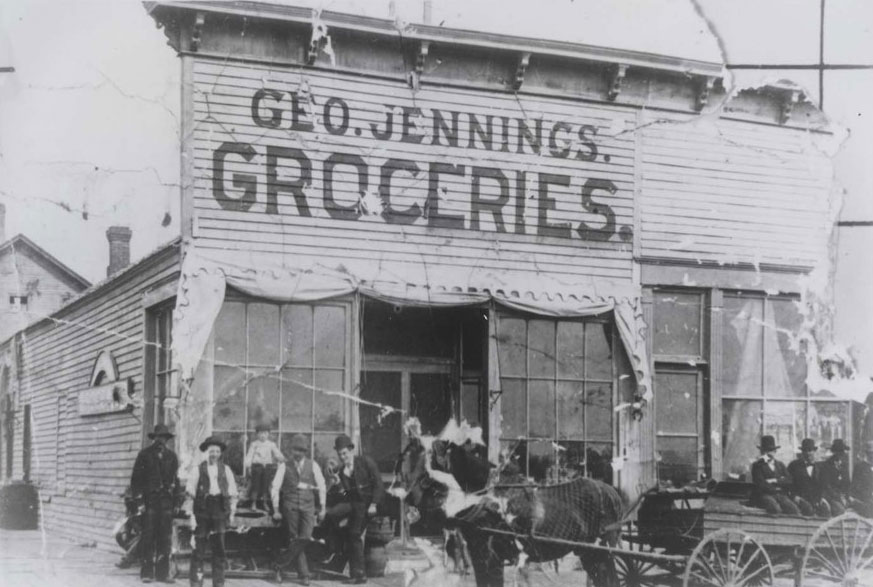
Who knows? Some of these people milling in front of the George Jennings' grocery store in Bismarck may have even been counted in the territorial census, 1884. SHSND SA 2011-P-009-00002

As America turns 250, a look back at the State Archives’ Bicentennial collections

The Bicentennial flag is displayed at the groundbreaking ceremony of the ND Heritage Center, October 1976.

The Bicentennial flag is displayed at the groundbreaking ceremony of the North Dakota Heritage Center, October 1976. SHSND SA 10909-00003

I love a good celebration! It’s so fun to create memories, see friends and family, and feel those party vibes—whether for birthdays, anniversaries, holidays, or festivals. A celebration on a national level, such as America’s 250th, adds an extra layer. It’s a mile marker!

Working at the State Historical Society during this auspicious birthday means we not only get to look toward the future, but we get to look back at the past in a very special way, viewing and sharing our North Dakota heritage through the collections we hold and remembering how similar milestones have been recognized. Most recently for us, that means looking at the nation’s Bicentennial celebration in July 1976. The State Archives holds many collections that document this celebration, and we continue to take in related items.

Without further ado, here is a roundup of some of our collections linked to the U.S. Bicentennial.

10157 North Dakota Oral History Project
“Old-timers” in every North Dakota county were interviewed over several years in the 1970s for this project. Photographs were also collected from those willing to share, and each person interviewed was photographed. This collection highlights famous North Dakotans as well as everyday people. For example, within this collection (consisting of approximately 1,200 audiocassettes), we have an interview with North Dakota musician and band leader Lawrence Welk; with Olaus Abelseth, a man who came to America on the Titanic and settled here; and with the wife of the doctor who happened to deliver my mother. It’s eclectic, beautiful, and a great snapshot of North Dakotans living in the state.

Sam Krause of Zap poses outside for a photo on the day of his oral history interview, Sept. 30, 1975.

Sam Krause of Zap poses outside for a photo on the day of his oral history interview, Sept. 30, 1975. SHSND SA 00032-ME-03-Intv002

1976 Dakota Photo Documentary Project
This photo project sent photographers to each community to record it as it was at that time. Pictures of main streets, businesses, and other beauty shots document these communities, whether vibrant and alive or abandoned. Residents, landmarks, and events are captured in some of these images.

These two images, depicting Nome, left, and Woburn, show some of the community photos included in our collections, circa 1976. SHSND SA 1976-00016, 1976-00103

These two images, depicting Nome, left, and Woburn, show some of the community photos included in our collections, circa 1976. SHSND SA 1976-00016, 1976-00103

North Dakota American Revolution Bicentennial Commission Collections
In North Dakota, a commission was formed to manage, create, designate, and assist as communities became involved in the celebrations. It designed logos, collected stories about the celebrations, assigned designations, and more. We have multiple collections relating to these aspects, documenting what happened around the state through written correspondence, audiovisual materials, and newspaper clippings.

Newspapers
Speaking of newspaper clippings, did you know that the State Archives is a repository for all official county newspapers in North Dakota? A law in effect since 1905 helps us collect these important sources of community news. The newspapers cover a lot of local happenings from the 1970s, including the Bicentennial, and we have these resources. Some are even digitized and can be searched and viewed on our website.

This article highlights Bicentennial events in the southeastern town of Kulm. The Kulm Messenger, July 1, 1976

This article highlights Bicentennial events in the southeastern town of Kulm. The Kulm Messenger, July 1, 1976

County History Books
Some communities chose to pour their heritage into book form. Various North Dakota communities created county and town histories that documented the history of their area and shared biographical material about the people living there.

21723 Bicentennial Wagon Train Oral History
In 1976, a wagon train path was established that took participants across the country to Pennsylvania. They camped, rode horses, pulled wagons, and traveled as the pioneers did. I was lucky enough to interview twins Sharan and Sherry Bethke, who participated in this event. This oral history relates their memories of this event—and was only conducted a couple of years ago!

Sherry is pictured here on her horse Red Feather

On July 4, 1976, North Dakotans Sharan and Sherry Bethke rode into Valley Forge as part of the commemorative Wagon Train. Sherry is pictured here on her horse Red Feather. SHSND SA 21723-00002

Sharan Bethke with her horse Dakota

Sharan and her horse Dakota on the same day. SHSND SA 21723-00003

As you can see, we place great emphasis on North Dakota’s heritage at the State Archives. We also were thrilled to contribute a section on exploring your roots to ND250 Road Trip: Our American Story, a new exhibit celebrating the semiquincentennial at the ND Heritage Center & State Museum.  

For more information on our Bicentennial holdings or how we can help you trace your heritage, try searching our website, and check out this “Our Heritage: Bicentennial Records” video.

Happy 250th birthday, America!

Thinking Outside the Box: Creative Uses of the State Archives Collections

Happy American Archives Month from the North Dakota State Archives reference desk! In our jobs as reference staff at the State Archives, we get the distinct pleasure of working directly with researchers in the Reading Room as well as online. As a result, we, perhaps more than other staff here, get to see how our visitors and patrons use and interact with the records in our collections. Thinking outside the box is important for researchers, so we do see some interesting uses of our material. They sometimes come up with ideas and methods we may not have thought of. After all, doing research is a bit like piecing a puzzle together and often requires a dash of creativity!

As we celebrate archives around the country, we thought it would be fun to highlight some of the uses of our collections that have been particularly memorable.

Sarah Walker, head of reference services
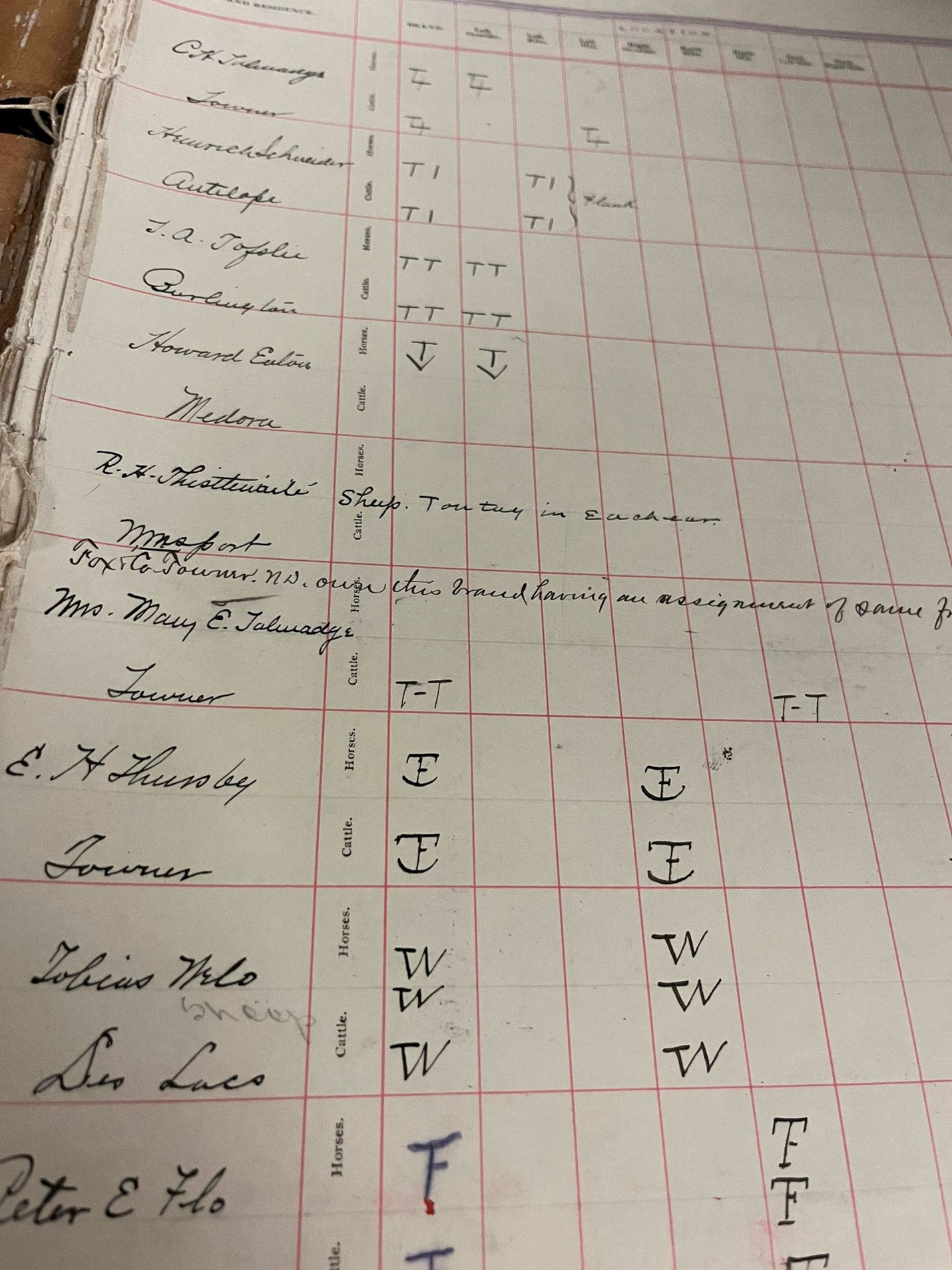
It’s so rewarding to see people find answers while researching in the State Archives, but it’s especially fun if the collections are successfully used in a different way or for a different outcome. One of my favorite examples happened very early on in my career at the State Historical Society. It involved our collection of documents relating to and indexing cattle brands. The collection of indexes became our State Series 30003, Brand Registration Books. This is basically a straightforward, if somewhat artistic, index originally published by the North Dakota Department of Agriculture. Most of the time, people who wish to use this are researching their own family’s brand.

In this instance, a patron came in and requested these books. This person did a lot of research on different people living in a specific area early in North Dakota’s history. She then carefully traced out the brands that they had on file and used these to create a quilt! I thought it was so meaningful that she used an index to create some crafted art … and I will never forget it! I still regularly point to this as a most creative use of a state government record series.

An old spreadsheet page with handwritten names and their brands

A page from a State Series 30003 brand book.

Ashley Thronson, reference specialist
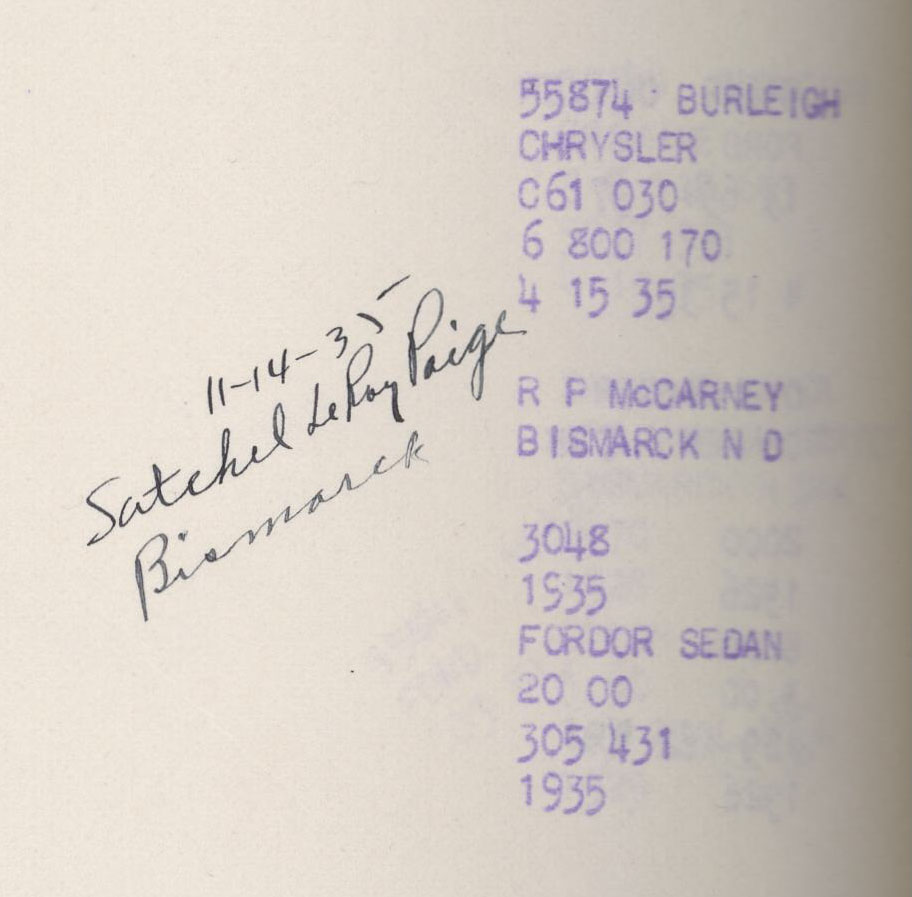
One of the most interesting ways I’ve seen State Archives collections used by researchers was when someone requested North Dakota Department of Transportation vehicle registration records to search for information about the baseball player Satchel Paige. The researcher was hoping to find his address and had not been able to find it in other resources. In a last-ditch effort to find his address, they searched through volumes for his name hoping that he had registered his vehicle and that his registration included an address.

Unfortunately, the Motor Vehicle Registration Records at the State Archives are not easy to use or search at all. The collection covers the years 1926-1963 and contains 290 volumes. The volumes are organized vaguely by year and by a registration number assigned by the state DOT; there is no index. The researcher looked through thousands of entries until at last stumbling upon one for Paige. While the entry did not include an address, it provided other useful information for the researcher. Having assisted the researcher, I joined in the celebration and excitement when they finally found it.

I like to remember this moment whenever I get stuck on research quests myself. It reminds me to think creatively for sources of information and to have patience and not get discouraged when faced with a large and overwhelming search.

11-14-35 Satchel LeRoy Paige Bismarck. 55874 Burleigh Chrysler C61 030 6 800 170 4 15 35. R P McCarney Bismarck ND. 3048 1935 Fordor Sedan 20 00 305 431 1935.

Satchel Paige’s 1935 vehicle registration entry, with a handwritten note indicating his name. State Series 32254

Daniel Sauerwein, reference specialist
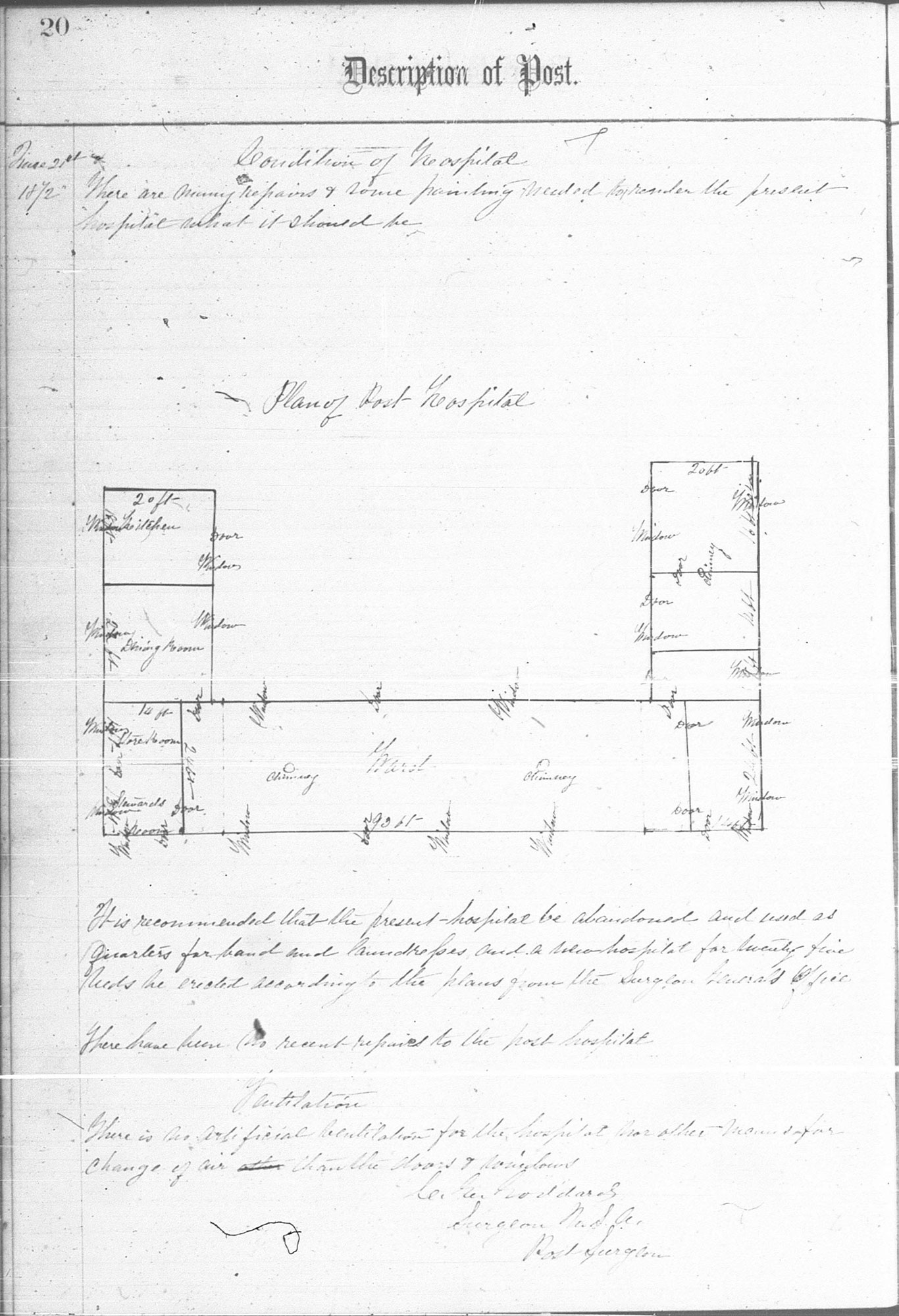
Recently a researcher accessed several microfilm rolls of fort medical histories, including one for Fort Rice, as part of research resulting in works related to the frontier Army and the Little Bighorn campaign. These resources provide important insights into life at the frontier military posts in Dakota Territory and their surrounding environments. They help us learn about the conditions that impacted people living in and around these forts and associated historical events. Topics include water supply and condition, plant and animal life, and disease and health as well as weather conditions. In this series, the records discuss replacing the current hospital at Fort Rice, which helps researchers better understand frontier and military medical care. This researcher was happy to use these records while they were here at the State Archives as they complemented other records we have related to the military forts in the state and made for a very fruitful research trip. Solid scholarly works came out of this research that expanded our knowledge of the people and places that shaped North Dakota and American history.

A page from the Fort Rice Medical History, dated June 24, 1872, outlining the plan for a post hospital and the need to replace the current hospital with this proposed building to provide better care of the sick

A page from the Fort Rice Medical History, dated June 24, 1872, outlining the plan for a post hospital and the need to replace the current hospital with this proposed building to provide better care of the sick. State Series 31141-Federal Records, War Department, Fort Rice Medical History, 1864-1878

We hope this post inspires your archival research journeys. Archival collections can be used in so many ways, and we are always excited to see what comes next for these records. And don’t forget! If you get stumped in your research—reach out to us. We may have some ideas for you to use in finding your answers!

Celebrate American Archives Month With These Fabulous Finds From North Dakota’s Collections

Working at the North Dakota State Archives means interacting with our collections on every level. Our team of archivists processes incoming materials, often becoming experts on each collection they touch. Our reference team uses these collections to assist others in access and research, learning many tidbits along the way. Through scanning, skimming, and handling the documentary pages and files of our collections, our staff loves to acquire new knowledge about the many significant things that have happened in our state. Learn more about some of the cool collections staff have recently acquired or rediscovered below!

Lindsay Meidinger, deputy state archivist

Did you know the State Archives boasts nearly 10 miles of paper records and a staggering 56 terabytes of electronic records? With so many fascinating collections just steps away, it is quite hard to choose just one to feature in this blog post. So I decided to put my decision in the hands of a random number generator. The result? Folder 2 of Box 4, State Series 31530.

A plain brown box in the State Archives stacks contains information related to the agency’s past educational outreach efforts.

What’s inside this unassuming box? It details the activities of the State Historical Society of North Dakota’s education team! These records chronicle over 120 years of educational events and programming, revealing how history has been presented and shared across generations. This specific folder contains programs from 1989.

Box 4, Folder 2 features programs of educational events and symposiums from 1989.

One might wonder, “Why preserve this?” Well, these documents offer insights for researchers and staff, providing a look at the evolution of outreach and programming by highlighting popular topics, types of interactions, and collective memories. This information helps our current education team build on past projects.

Virginia Bjorness, head of technical services

Earlier this year, the State Archives received four digital publications from Michael Gustafson, all relating to the early history of Portal, North Dakota, and the Lanthorn family. Included in the quartet is a short booklet by Wesley C. Engstrom, titled “Merna's Penny Bank.” This digital booklet documents the struggles of the Union Bank of Portal during the 1920s and the tragic death of the bank manager, who had gifted the penny bank to Merna Lanthorn. Engstrom also includes excerpts from The International, the newspaper serving the Portal area at the time, along with pictures of the recently restored bank interior.

SHSND SA OCLC 1417163131

Emily Kubischta, manuscript archivist

The State Archives recently received the records of the Monday Club, a study club for Bismarck women that has operated since 1902 (MSS 11655). In addition to researching and presenting on assigned topics, club women made charitable contributions and worked to make Bismarck stronger. Even though the Monday Club bylaws set a limit capping membership at 20, the club women have a long list of contributions. Some of these include raising funds for the Sakakawea statue on the state Capitol grounds, assisting with the first state sale of Red Cross stamps, advocating for public health by asking for funding for a state tuberculosis sanatorium site and securing the first nurse for Bismarck schools, preparing the first MASH unit locally that was then replicated during World War I, and adopting a French orphan (for one year) after World War I. Included in the records is an album of photographs of the homes of early Monday Club members (early 1900s) and the homes of members in 2002. This album documents some of the historic residences in Bismarck, ties owners to the homes, and demonstrates the continuity of the organization through its many years of active service to the community.

Letters and a postcard photograph to members concerning the adoption of French orphan Marc Régnier in 1919. SHSND SA MSS 11655

The historic residences photograph album shows significant Bismarck homes of the time. SHSND SA MSS 11655

Larissa Harrison, state government archivist

You never know what information you will uncover in some collections. State Series 32566 is part of the Department of Transportation’s records. However, this series, covering the district of Grand Forks, includes letters of recommendations from the North Dakota Democratic and Republican parties from the 1930s to 1940s, reflecting the political cronyism of the period.

Greta Beck, audiovisual archivist

One of my favorite home movie collections at the State Archives was filmed by Clayton Maw who documented his family's everyday life and important moments in and around Kidder County from 1949 to 1970—all on 8 mm film. His films cover a wide variety of family milestones like weddings, birthday parties, and graduations, as well as more everyday events like reshingling a barn, stunt car races, harvesting a field, and playing cards.

Maw loved farming and had a passion for airplanes, hunting, and traveling with his family. These interests are visible in the footage he captured of hunting scenes, family vacations, the Bismarck Air Show, and aerial shots from an airplane of Bismarck and the Garrison Dam. Home movies tell a very personal story through the perspective of a family and give the viewer a more intimate look at what life was like when the films were made.

This still from Clayton Maw’s 8 mm film shows young children and a dog helping out on a family farm in Kidder County, circa 1955. SHSND SA MSS 11375-00001

Remembering July 4, 1889: The Constitutional Convention in North Dakota

Happy Independence Day! Did you know North Dakota’s history is specially linked to this holiday? On July 4, 1889, the men who assembled the original draft of our state’s constitution that established all our state’s laws met in Bismarck for the Constitutional Convention. There were 75 delegates who worked on the document, and it was handwritten in sections by several different clerks. Other members elected from outside the committee to work included a chaplain, a chief clerk, a sergeant at arms, and a watchman. The work was completed Aug. 17, 1889. Some—though not all—delegates signed it. The constitution was approved by voters Oct. 1, which is noted on North Dakota’s state seal. On Nov. 2, President Benjamin Harrison signed this state into being. The Fourth of July in 1889 must have been one of special excitement—it led to North Dakota being part of the United States!

So, to celebrate, and without further ado—here are four more interesting things about North Dakota’s Constitutional Convention.

  1. North Dakota wasn’t alone. Washington, Montana, and, of course, South Dakota all met simultaneously to set up a constitution prior to receiving statehood. All were reported on with interest, and the different conventions even wired greetings to each other.

    Becoming a state was heavily politicized, especially in how it was perceived that each new state may add to the political arena. Legislation monitored this process. President Grover Cleveland had signed the Omnibus Bill allowing these four areas to become states and outlined the means for meeting in convention, but earlier drafts did not even fully establish if Dakota Territory would enter as one large state or be separated. It also originally included New Mexico on the docket.

    The Disney movie “The One and Only, Genuine, Original Family Band” also displays this history as the backdrop to its plot, following an early pioneer family of divided political leanings which moves to “Dakota” around the time of these events. Along with some incredibly catchy tunes about both Grover Cleveland and Benjamin Harrison, it’s a trip to watch—and it was used as research for part of the state’s centennial celebration!
     
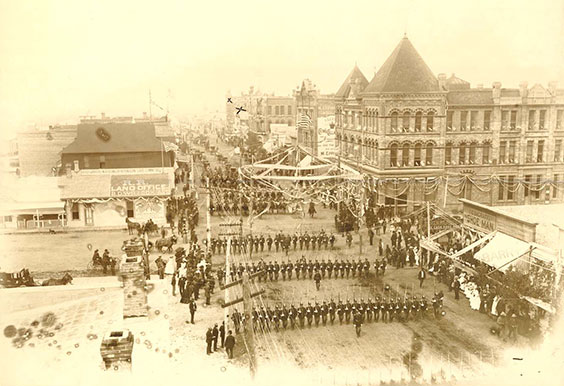
  2. There was a parade. Not too surprisingly, there were people gathering to work and people excited to see what was going on, and there was pomp and circumstance. Delegates joined a procession to the Capitol building down Main Street, nearly a mile in length, according to reports. This parade consisted of infantry and cavalry from Fort Yates and Fort Lincoln, two bands, a company of militia, the Grand Army of the Republic post, fire companies, and a group of “ladies on horseback” who represented the four new states being formed. Sitting Bull was also there and participated in the parade.

    an old photograph showing an aerial view of a parade going down the middle of a street with many buildings lining the streets 
    SHSND E0621-00001
     
  3. They took a few breaks. The delegates met over a calendar period of 45 days but didn’t work on the constitution more than about 32, and several times, a few days were taken off. A couple times, requests for a brief adjournment were requested, but not accepted. Once, a break was requested so farmers could be permitted to see to their farms. This request was first denied but was then contested.
     
  4. The delegates setting up the constitution kind of forgot the politics. In the original draft of the North Dakota State Constitution, delegates did not fully create the process of voting for the United States president. So the state called its first special session in 1892 to correct this, just prior to the first presidential election that North Dakota voters would be able to participate in. At that time, it was set up so that voters chose their three electors directly. Ironically, North Dakota evenly split its vote. Each of the three electors voted for a different candidate: one for the Populist, one for the Democratic, and one for the Republican. As far as I am aware, this was the only time that has ever happened in a presidential vote!

Interested in more history about this? Check out the constitution, view this photo of the members of the original Constitutional Convention, and see the reunion photo of the remaining members in 1914.

How Fun Are These? Historical Facts From the State Archives, Part II

Fun Fact: The State Archives team can’t get enough fun facts! In celebration of American Archives Month, our staff is sharing interesting and unique stories they have learned about North Dakota. Read on for part two of our favorite fun facts about the state! (View part one here.)

Sarah Walker, Head of Reference Services

Did you know that Laura Eisenhuth was the first woman in the United States elected to a statewide office? Eisenhuth, who was living in Foster County at the time, was elected state superintendent of public instruction in 1892. She had been first nominated to run for this office in 1890 but was initially unsuccessful. Eisenhuth served a single term, which lasted through 1894. She was then succeeded by another woman, Emma F. Bates. 

All of this is extraordinary to me, especially since North Dakota continued to struggle with the idea of woman suffrage for many years. The topic recurred in much early legislation in both Dakota Territory and the state of North Dakota, including at the Constitutional Convention. North Dakota women did gain more agency in their lives and were able to vote for president just prior to the passage of the 19th Amendment, which granted women across the country the right to vote. How interesting that these early women were still eligible to hold these offices and helped others break through the glass ceiling!

portrait of a woman with short, curly hair

Laura J. Eisenhuth, superintendent of public instruction, circa 1894. SHSND SA A1591-00001

Greta Beck, Audiovisual Archivist

I have always heard stories from my grandparents who farmed near Sawyer that Black Butte used to be home to a ski lift and jump. Black Butte rises from the prairie at 1,716 feet and overlooks the Mouse/Souris River Valley, dominating the landscape for miles. With the help of the State Archives newspaper collections, I was able to find articles confirming that Black Butte was used as a ski hill in the 1930s. Prior to becoming a ski hill, Black Butte was used as a meeting and camping place for Dakota and Métis bison hunters.

Emily Kubischta, Manuscript Archivist

In the early 1930s, teacher Gertrude Evart’s history class at Bismarck High School created a model of the four blocks from First Street to Fifth Street on Main Avenue, as they appeared in Edwinton, Dakota Territory, in 1873. Each student handmade one or more of the street features, which included businesses, Camp Hancock, people, fences, flagpoles, a railroad depot, train, sidewalks, signs, a stagecoach, houses, chimneys, windows, wagons, Red River carts, barber poles, and an eagle. Even soldiers were molded and painted for the display. Unfortunately, the model was destroyed while moving it into the newly constructed Bismarck High School in 1935. However, a typed layout of the businesses and list detailing which students created which aspects survives in the George F. Bird Papers (MSS 10216). Both documents tell us a lot about Bismarck’s Main Avenue in the early days.

Edwinton’s Main Avenue, 1873. This photograph shows some of the buildings likely depicted in a model of the street made by Bismarck High School students in the 1930s.

Edwinton’s Main Avenue, 1873. This photograph shows some of the buildings likely depicted in a model of the street made by Bismarck High School students in the 1930s. SHSND SA C0529-00004