




On July 1, ND250 Road Trip: Our American Story, celebrating our nation’s 250th birthday, will open at the ND Heritage Center & State Museum. The product of a four-year effort by staff, the exhibit covers North Dakota’s history from 1776 to the present, with a peek at what may lie ahead.
It has been a monumental effort for many of us in the agency. I have served as project manager in addition to contributing to the research and writing of interpretive content and designing the gallery layout. My efforts would have been impossible without my colleagues. Their talents and skills have made the exhibition a reality.
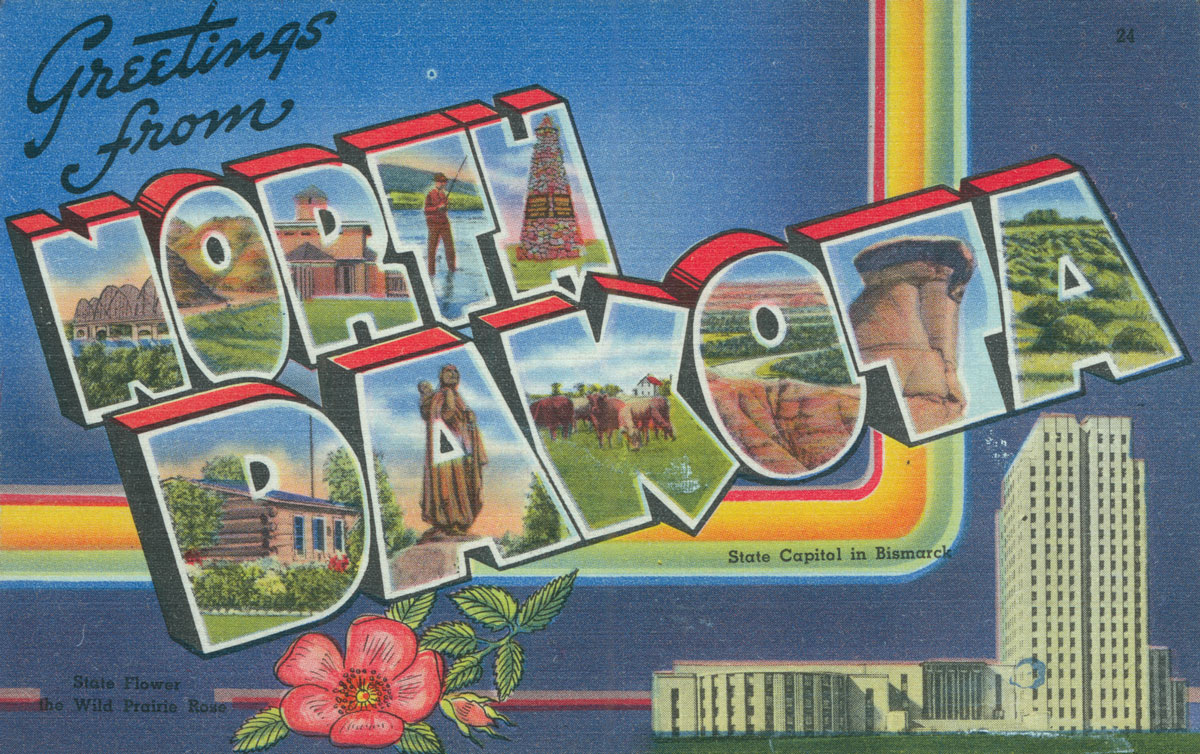
Postcard, 1940. SHSND SA B0716-00039
Much of the interpretation is supported by images and objects from our collections. The postcard above with its bold graphics and Technicolor palette set the tone for the project early on. The image appears in the exhibition and is joined by a myriad of similarly impactful content.
I can’t help but play favorites when working on an exhibition, so as I introduce you to the exhibition’s various sections, I want to share some of the images and objects that really appeal to me.
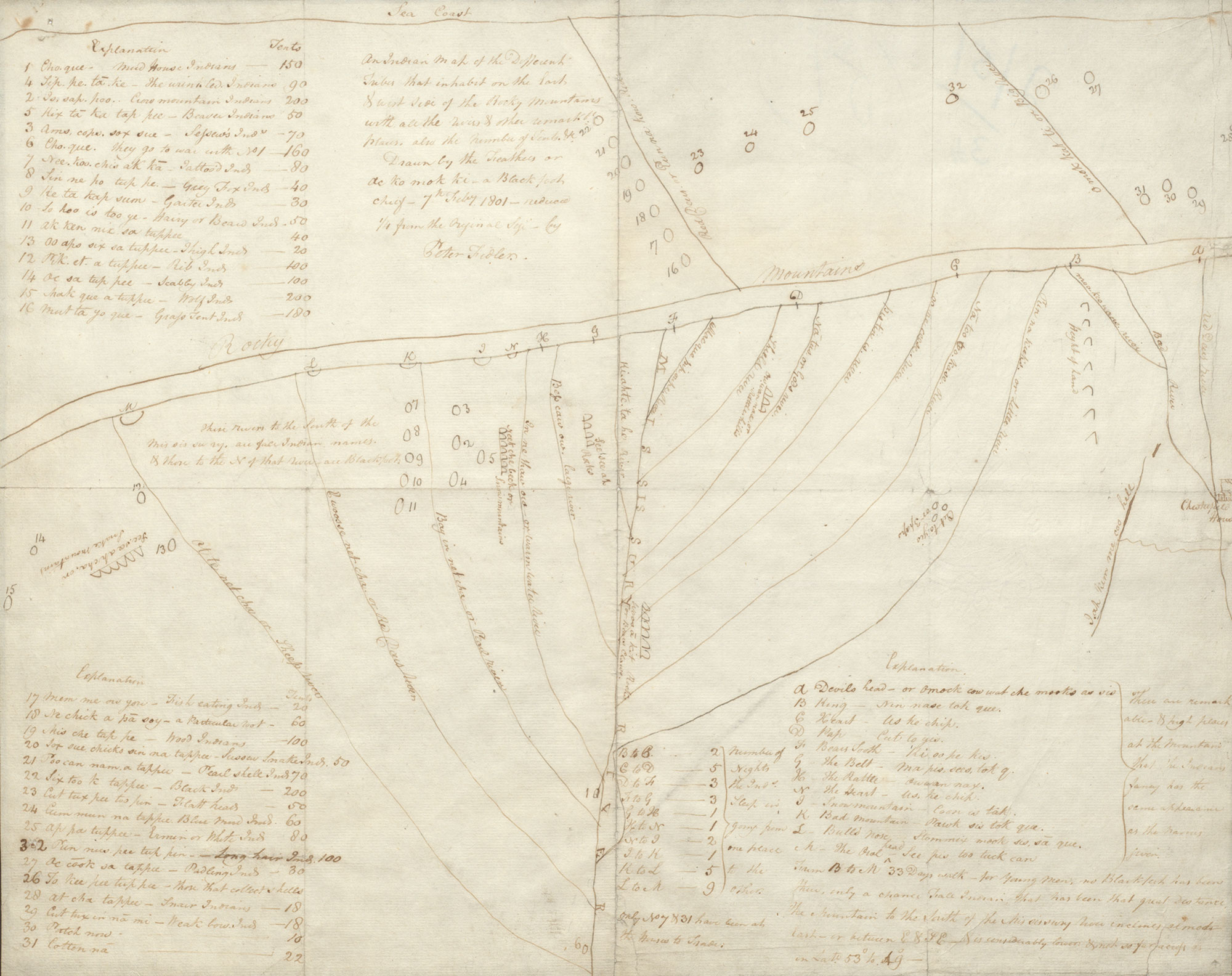
An Indian Map of the Different Tribes that Inhabit the East & West Side of the Rocky Mountains with Rivers and other Remarkable Places, Paul Fidler, 1801. Hudson’s Bay Company Archives, Archives of Manitoba
The Introduction situates the exhibition as part of the national America250 celebration. It also explores how the physical landscape of the Louisiana Territory, which included the region now known as North Dakota, was perceived in 1776, and how those details were expanded and clarified through additional exploration.
Among the maps in this section is one outside the traditional realm of cartography. This visual representation of the Missouri River is interpreted based on an oral explanation and a hand-drawn diagram provided to an employee of the Hudson’s Bay Company, rather than from a surveyor’s field measurements.
The map’s contents were conveyed by Blackfoot chief Ac ko mok ki (Feathers) to Paul Fidler. The overall drawing looks like a folding fan or a triangular rake. The Missouri River is depicted as a central column with its tributary rivers forming radiating spines. The river is accurately shown as coming from the Rocky Mountains and is notated with lists of tribal communities, populations, landmarks, and travel times between locations. It provides a novel and non-Western way to consider space and dimension. I find that appealing.
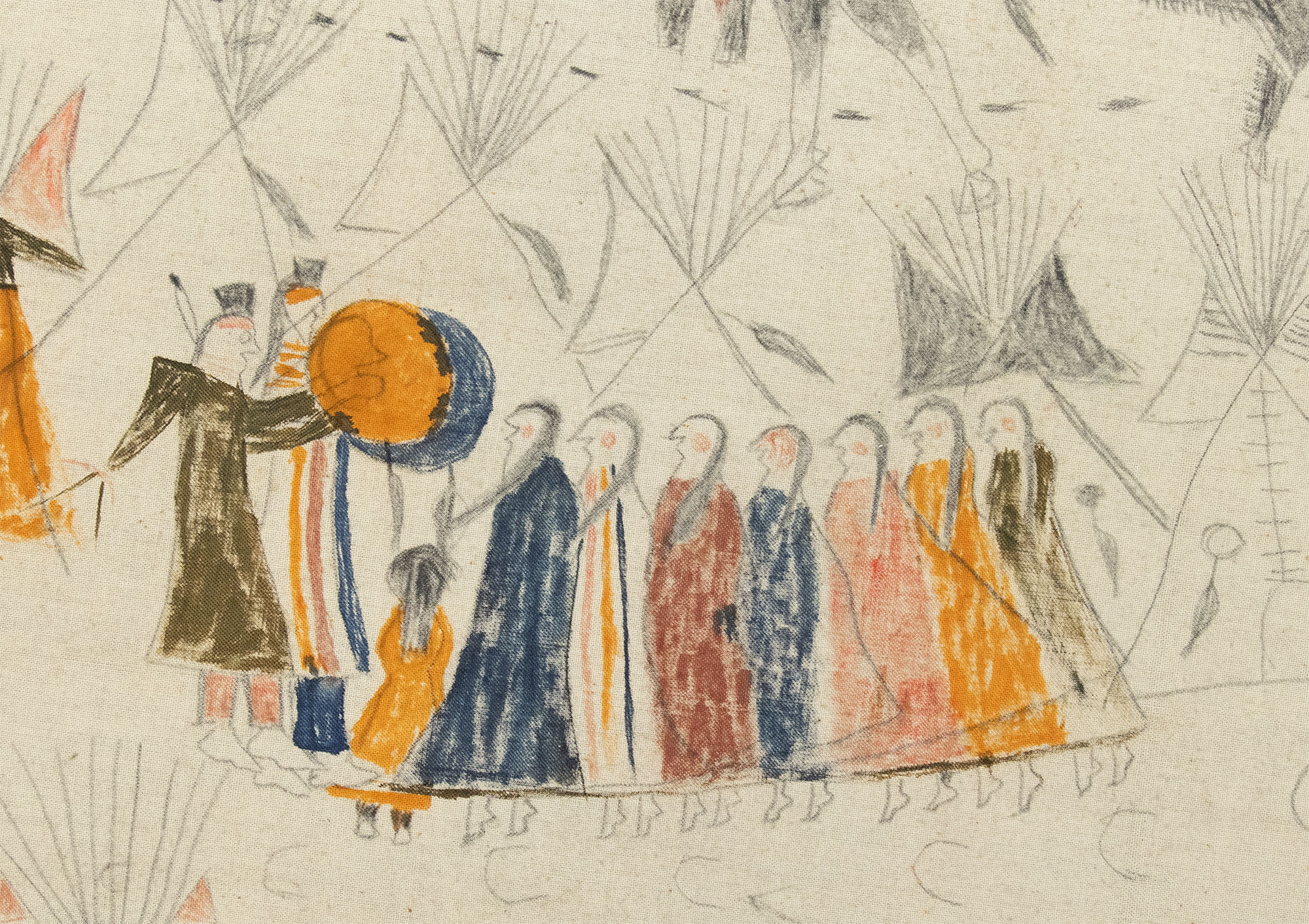
Detail of Dakota War Record (Lakota/Sioux), 1880-1889. SHSND 11935
Who Was Here in 1776? looks at the vibrant Indigenous cultures existing in the region and the area’s importance as a hub of Native trade and commerce. This portion of the exhibition includes extensive artwork and photographs documenting the region’s tribal people. During the project development phase, our curators strongly recommended incorporating original artworks by Native artists. Toward this goal, we photographed several of the winter counts in our collection, including details of scenes and individuals, for inclusion.
My favorite winter count detail is a representation of a women’s dance line that is part of a Dakota image from the late 19th century. The large drawing is composed on cotton muslin in graphite and ink. The events being documented happened in colder weather, as the women are wrapped in colorful wool trade blankets and the two men providing the rhythmic accompaniment to their dance with hand drums wear hooded wool coats (capotes). Throughout the larger, episodic artwork other individuals are also dressed in warm clothes and some are shown near campfires. Three men are even wearing gloves with exaggerated splayed fingers.
I love the energy of this image, especially that the women are dancing on their toes. They are arranged in a dance line and rendered in the context of the tipi encampment. I have seen this same configuration of women elders in an early motion picture of a powwow made during the 1920s. This image adds both color and gravitas to the dance.
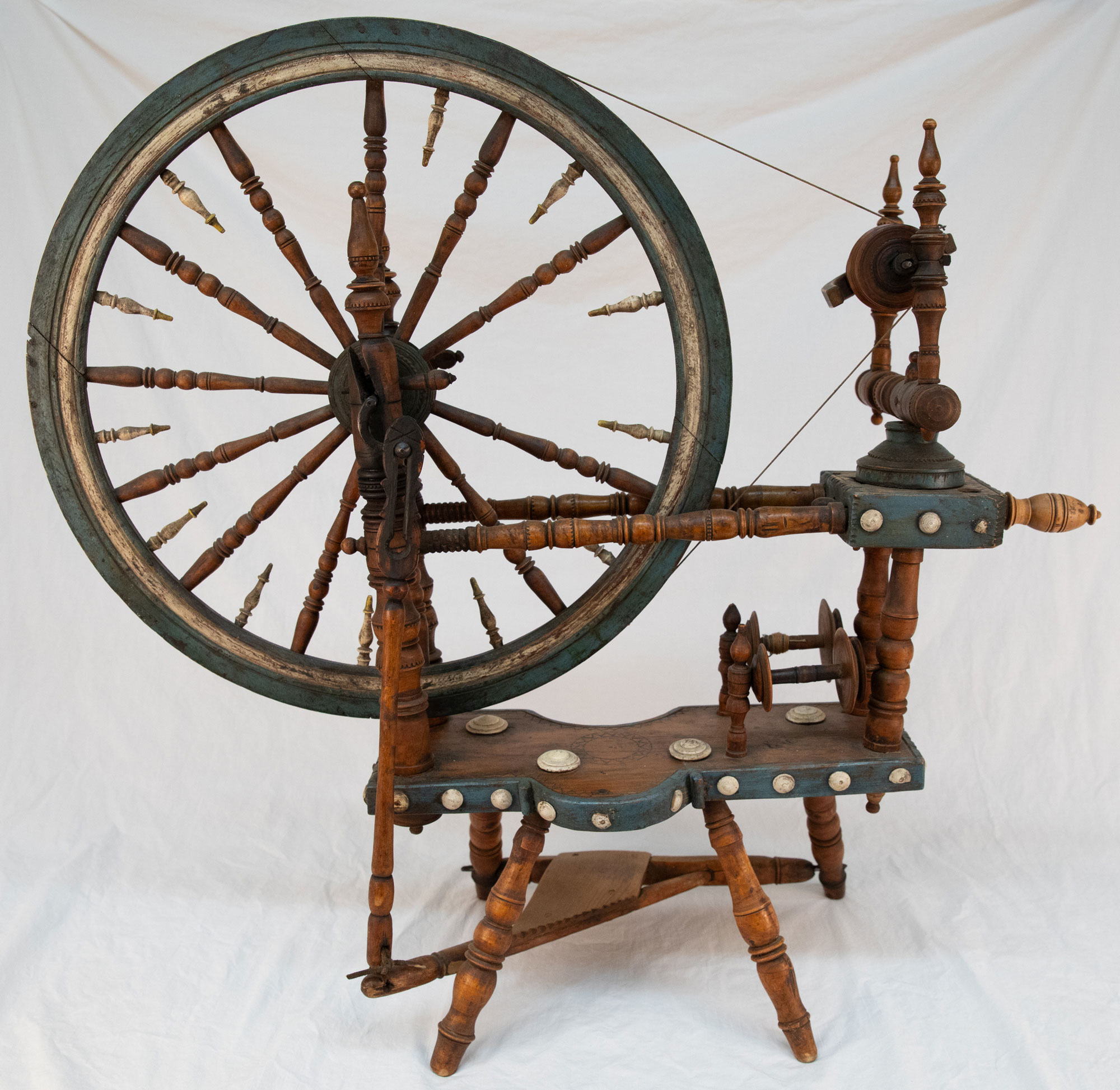
Norwegian spinning wheel, late 1700s. SHSND 11643
European Immigration explores the circumstances that encouraged the mass immigration of Europeans in the 19th and early 20th centuries and how it defined the character of North Dakota. It also explores the impact of immigrants on the region’s Native tribes, including the loss of traditional lands and the imposition of the reservation system.
One particular delight is a small Saxony spinning wheel. It traveled from near Oslo, Norway, in 1881 to a new home in Milnor. The device belonged to the Anderson family and is one of the oldest objects in the exhibition. Originally handcrafted around 1750, it is made almost entirely of beautifully turned and shaped wood. The spinning wheel looks a bit like an overgrown stool. Though compact in form, it remains an excellent example of the combining of the decorative and the practical. The drive wheel is missing one hand-turned spoke, and a few of the carved white “buttons” are cracked but otherwise the piece is intact and even retains its original paint colors.
This spinning wheel speaks to the importance of textile production in rural households, both in the Old World and here. An early form of mechanization, the spinning wheel was a major part of everyday domestic life in rural North Dakota. At the time, most household textiles and clothing were made from home-grown fibers. Commodities such as wool, flax/linen, and cotton required processing to turn into spun yarns for weaving and this device served that purpose. Members of the household were constantly harvesting, processing fibers, spinning, knitting, and weaving materials.
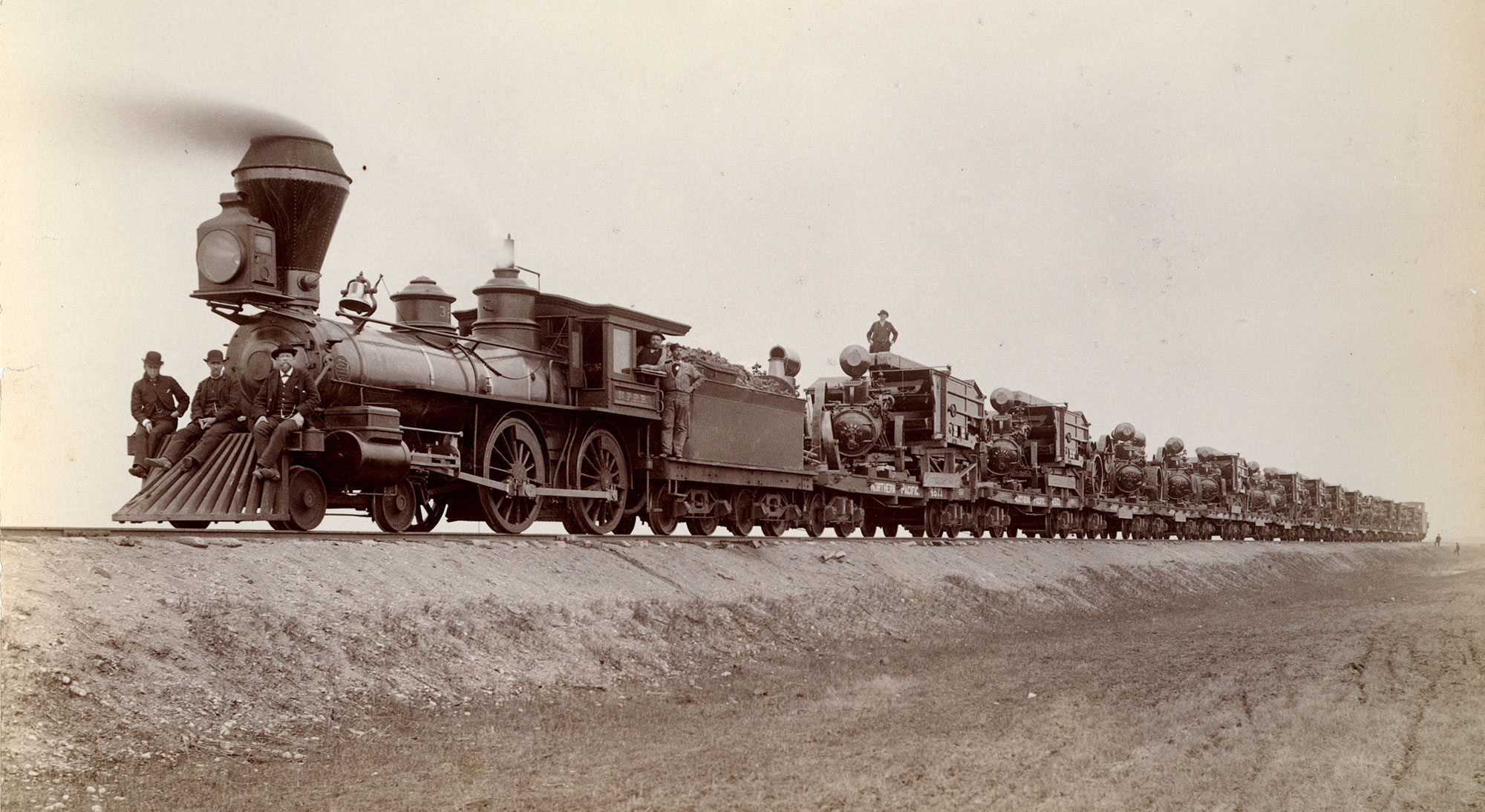
Northern Pacific Railway train carrying steam engines and threshers, 1883. SHSND SA 2019-096-00002
Mechanization is also represented in a photograph of a Northern Pacific freight train in the Red River Valley. The Red River Valley consists of the richest and most productive soil in the region. This dynamic photograph captures the importance of the latest technology in North Dakota’s rise as an agricultural powerhouse. In the image, a steam locomotive pulls a string of flatcars carrying steam engines and a fleet of threshers. Steam engines, such as these, would eventually power threshers in the field during the all-important harvest season.
Another pertinent theme conveyed in this section is the survival of horse culture among tribal groups under the reservation system. I chose this image for the exhibition because it shows two Lakota men interacting with horses but also playfully interacting with one another. I like its humor, but I love the title.
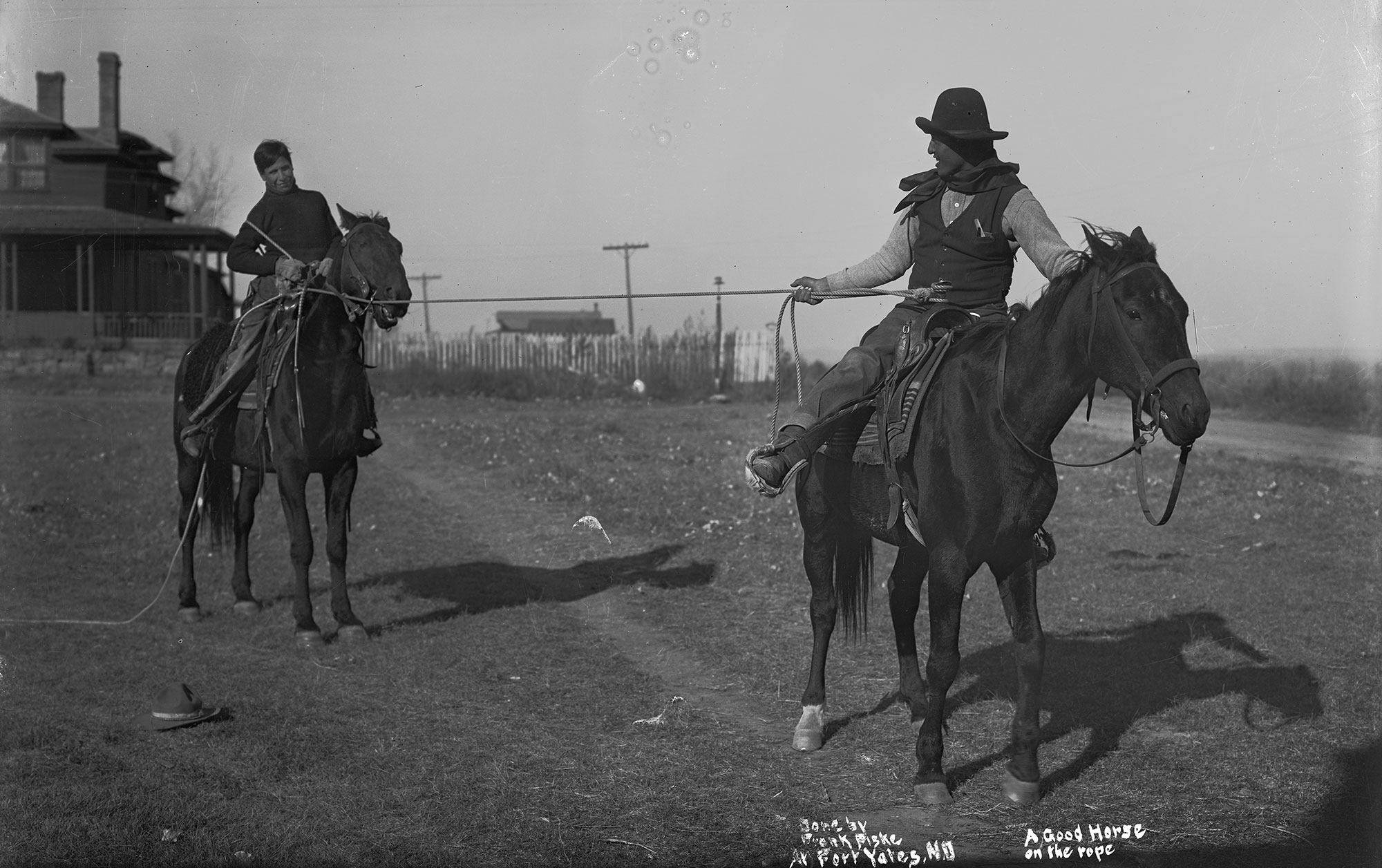
A Good Horse on the Rope, Frank Fiske, circa 1910. SHSND SA 1952-00541
Destination North Dakota: Promoting the State features the range of promotional campaigns created to entice early immigrants and eventually tourists to come to Dakota Territory and North Dakota. The section also provides an overview of how the various campaigns have impacted perceptions of North Dakota’s contributions within the region, the nation, and the world.
North Dakota early on tapped into its importance as an agricultural center. Many of the earliest promotional campaigns championed the bounty and resources of the region. One such promotional event was a display at the Panama-Pacific International Exhibition in San Franciso (the 1915 World’s Fair). The centerpiece of the North Dakota Building was a towering structure mimicking the Eiffel Tower made entirely of corn and corn stalks and proclaiming the slogan “North Dakota Enlightening the World.” The image is very much of the era and represents a healthy dose of unchecked boosterism. North Dakota was making its importance known.
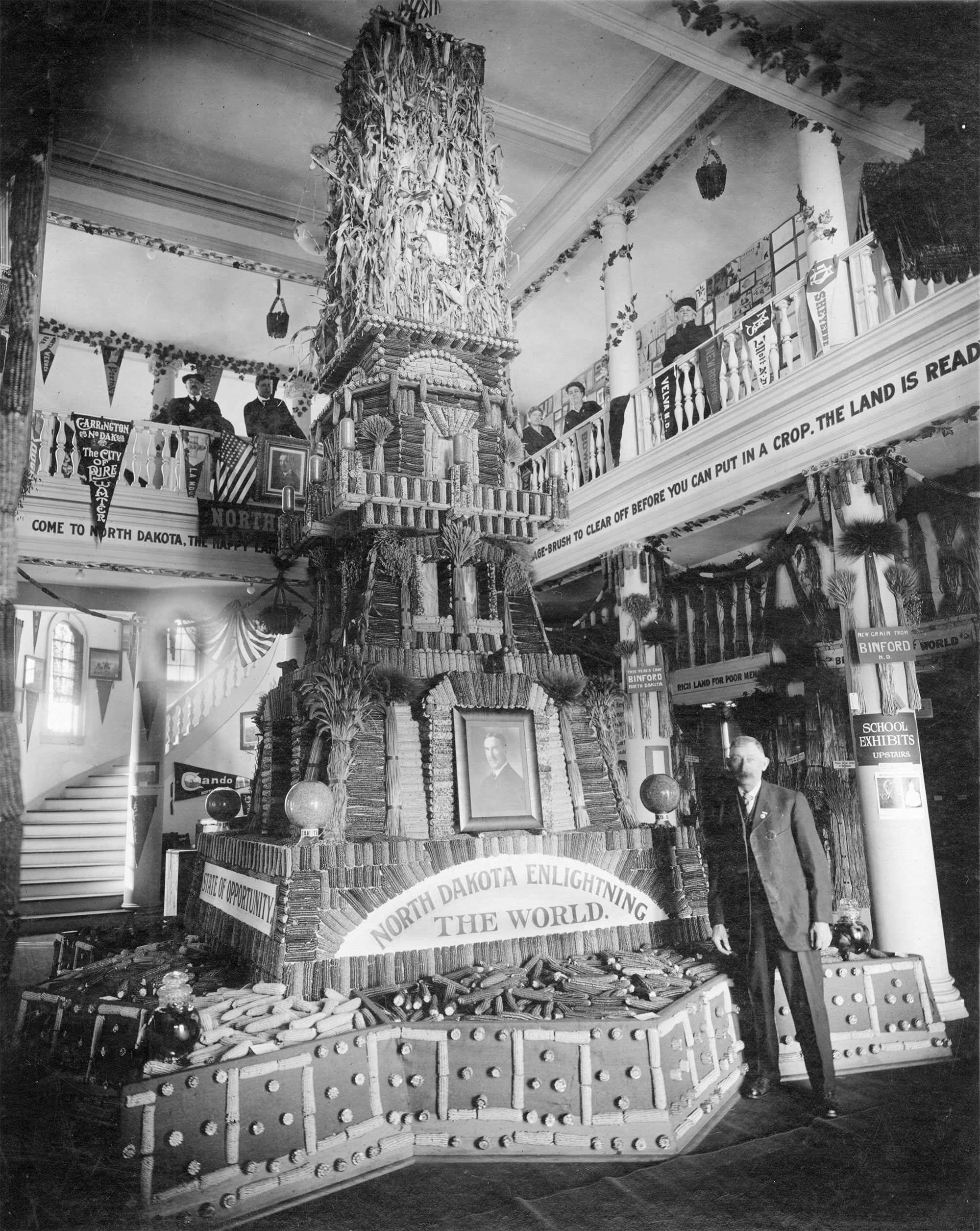 A corn towner display at the North Dakota Building, Panama-Pacific International Exhibition, 1915. SHSND SA E0409-00001
Explore Your Roots introduces visitors to genealogy and family history research techniques and resources by posing the question “Where were your people in 1776? It also provides details of resources available through the State Archives to investigate your family history. Period photographs of people engaging in various activities represent the “Faces of North Dakota” and show the continuity and resilience in North Dakotans’ traditions over time.
A favorite image is this photograph of an indoor curling rink in Pembina County around 1913. In an era before mechanical refrigeration, the photo hides the fact that it had to be below freezing indoors to maintain the curling sheet, the house (target), and its familiar circular markings. Curling was only possible in colder climates. The men in the photo are all wearing wool coats and hats, many with brooms in hand. Today, curling is North Dakota’s official state sport.
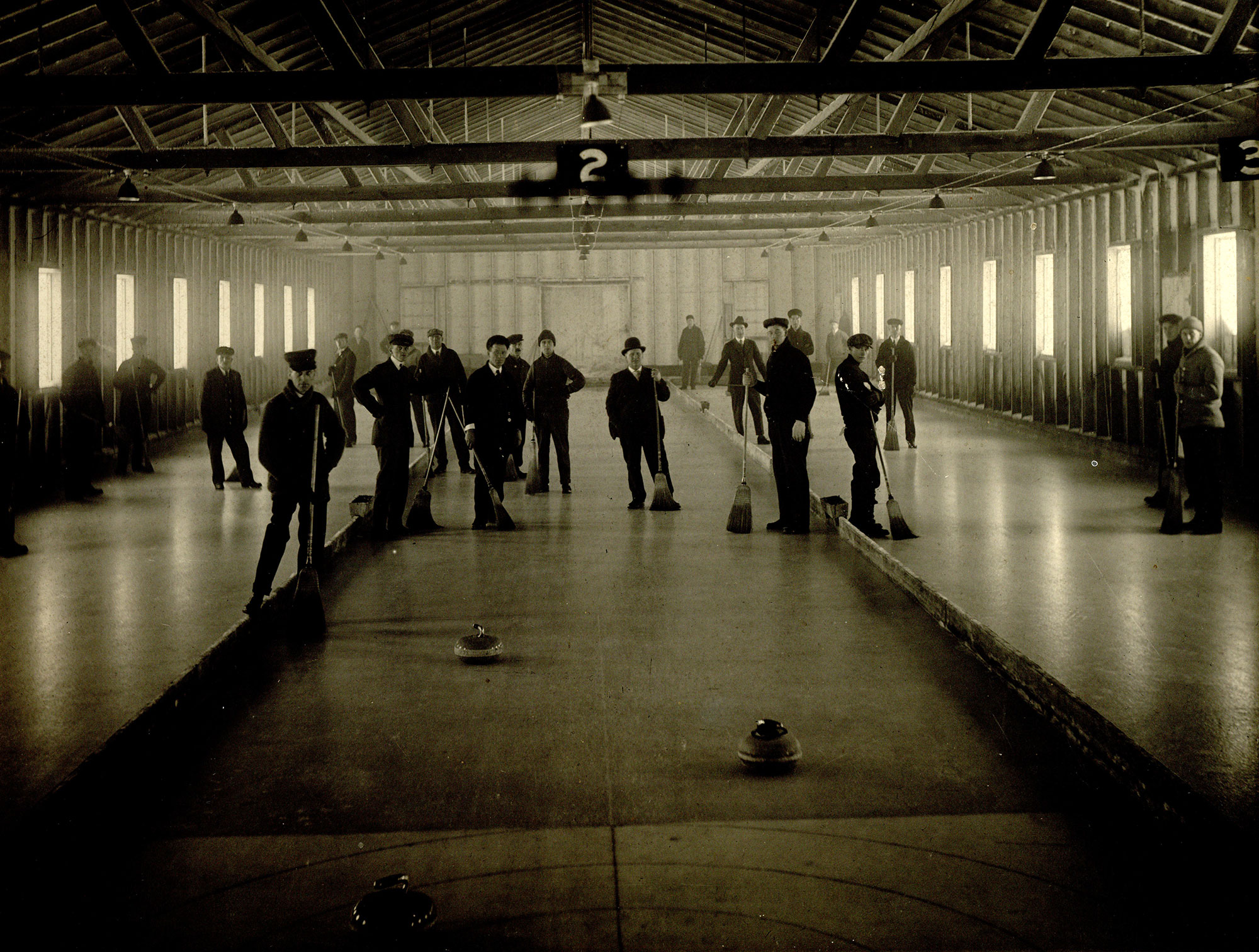 Indoor curling rink, Pembina County, circa 1913. SNSND SA 107-00230
New Frontiers: The Road Ahead focuses on North Dakota’s current role as a leading agricultural and energy producer within the nation’s economy, exploring the surprising range of technological research and advances happening within the state and asking what the next 250 years might bring. The section celebrates some of the unique and defining features that make North Dakota what it is, including our fun assortment of “world’s largest” roadside art.
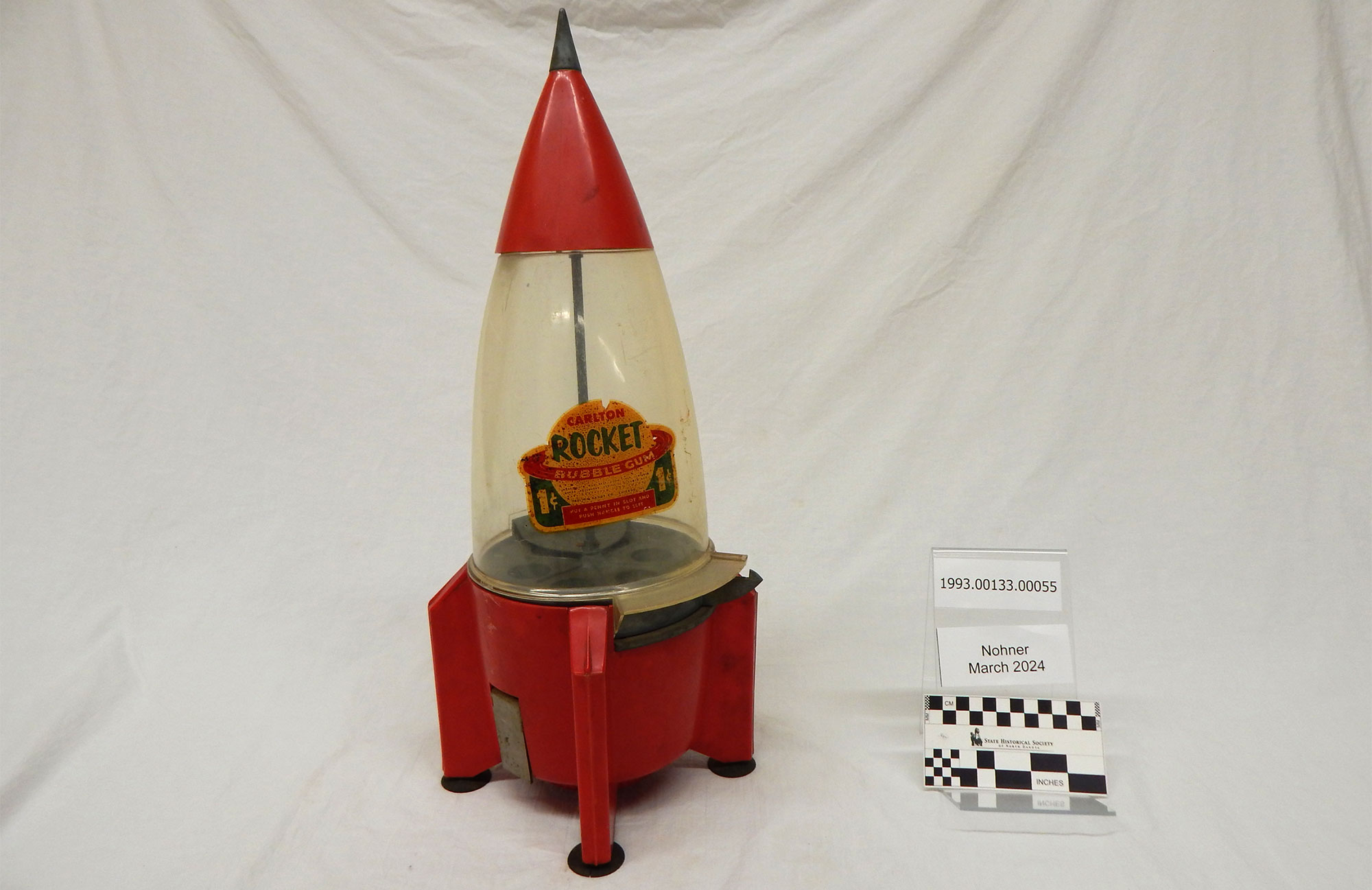
Vending machine, circa 1960. SHSND 1993.133.55
Included in this section is a prototype spacesuit created at the University of North Dakota for use on the Martian surface. There’s also a bubble gum dispenser shaped like a spaceship that truly endeared itself to me. It reminded me of the Space Race obsession that permeated our culture during my youth in the 1960s. I was jealous of a friend’s toy Gemini space capsule for his G.I. Joe and then felt superior when I received a Maj. Matt Mason space station and lunar walker. In those heady days accompanied by the theme music to the original “Star Trek” series, the world seemed unlimited.
I truly hope that visitors to ND250 Road Trip: Our American Story, which runs through October 2028, will find similar moments of connection and inspiration. The exhibition provides so many stories and opportunities to engage. I invite you to visit the ND Heritage Center in Bismarck and experience this exhibition for yourself.