




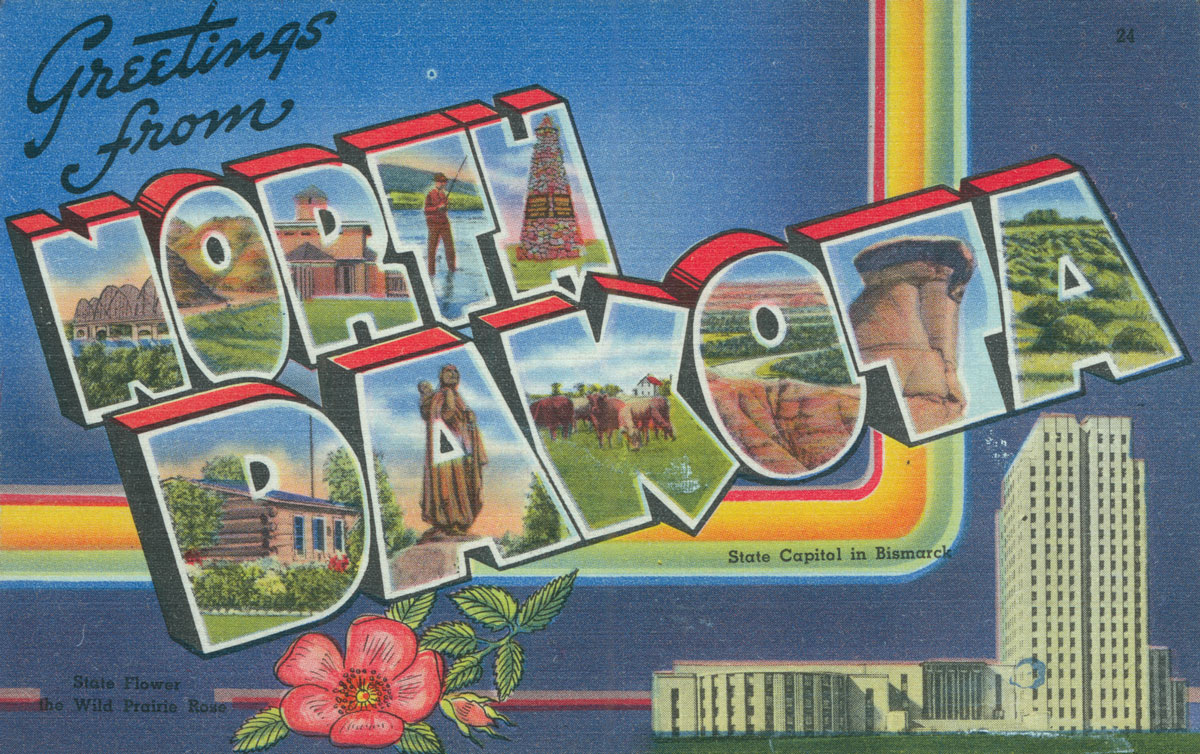
North Dakota postcard, circa 1940. SHSND B0716-00039
“This is a good country for a poor man,” F.A. Newman, a Missouri transplant to North Dakota, wrote in a 1906 letter to the Great Northern Railway. “A man can own his own home and be independent of care and worry.”
His testimonial was one of dozens from farmers that appeared in the railroad’s promotional bulletin aimed at attracting settlement to the state. Before social media and influencers, first-hand accounts such as Newman’s were among the creative ways state officials and business interests helped get the word out about North Dakota.
Of course, we’ve come a long way since then—and what a trip it’s been. This summer, the agency will celebrate the United States’ 250th birthday with the launch of a new exhibit tracing our journey from 1776 to today. ND250 Road Trip: Our American Story will include promotional materials that have shaped North Dakota’s identity and inspired people to move or visit this place we call home. One of the most enjoyable aspects of working on this exhibit has been going through historical and contemporary advertising that has sought to frame North Dakota as a desirable destination for those seeking a new life or just a Western adventure.
Given the state’s reputation as an “agricultural empire,” it’s no surprise that North Dakota’s first Commissioner of Agriculture and Labor Henry Helgesen was also an early booster in chief. In 1892, Helgesen released “North Dakota: A Few Facts Concerning Its Resources and Advantages,” a slim booklet packed with statistics on crop yields whose clever use of alliteration more than makes up for its lackluster visual appeal. Who wouldn’t want to move to “a land of prolific products and prosperous people”?
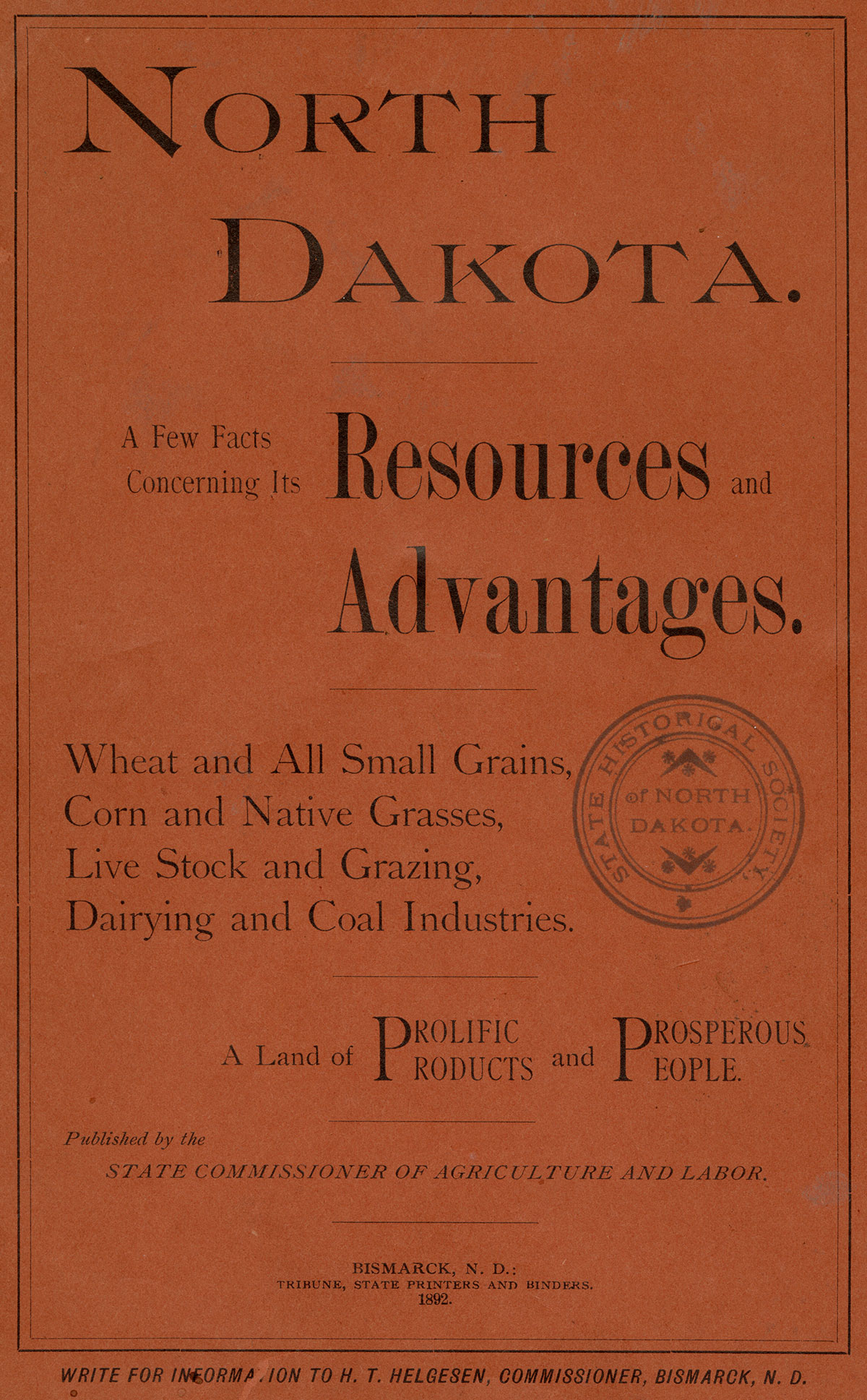
“North Dakota: A Few Facts Concerning Its Resources and Advantages,” 1892. SHSND SA OCLC 10304023
Competition for new residents was stiff in the early days of statehood. Business interests and state officials worried that North Dakota was losing potential immigrants to Canada. Government officials, railroads, townsite companies, and newspapers rallied with inventive, often exaggerated, marketing campaigns to find and attract newcomers. A state magazine was even launched in 1906 to herald North Dakota’s “upward and onward march of development.”
Around this same time, W.H. Brown, head of a land company owning 200,000 acres in southwestern North Dakota, rolled out a campaign for the new town of Mott, using the catchy slogan “Mott’s the Spot,” which endures to this day.
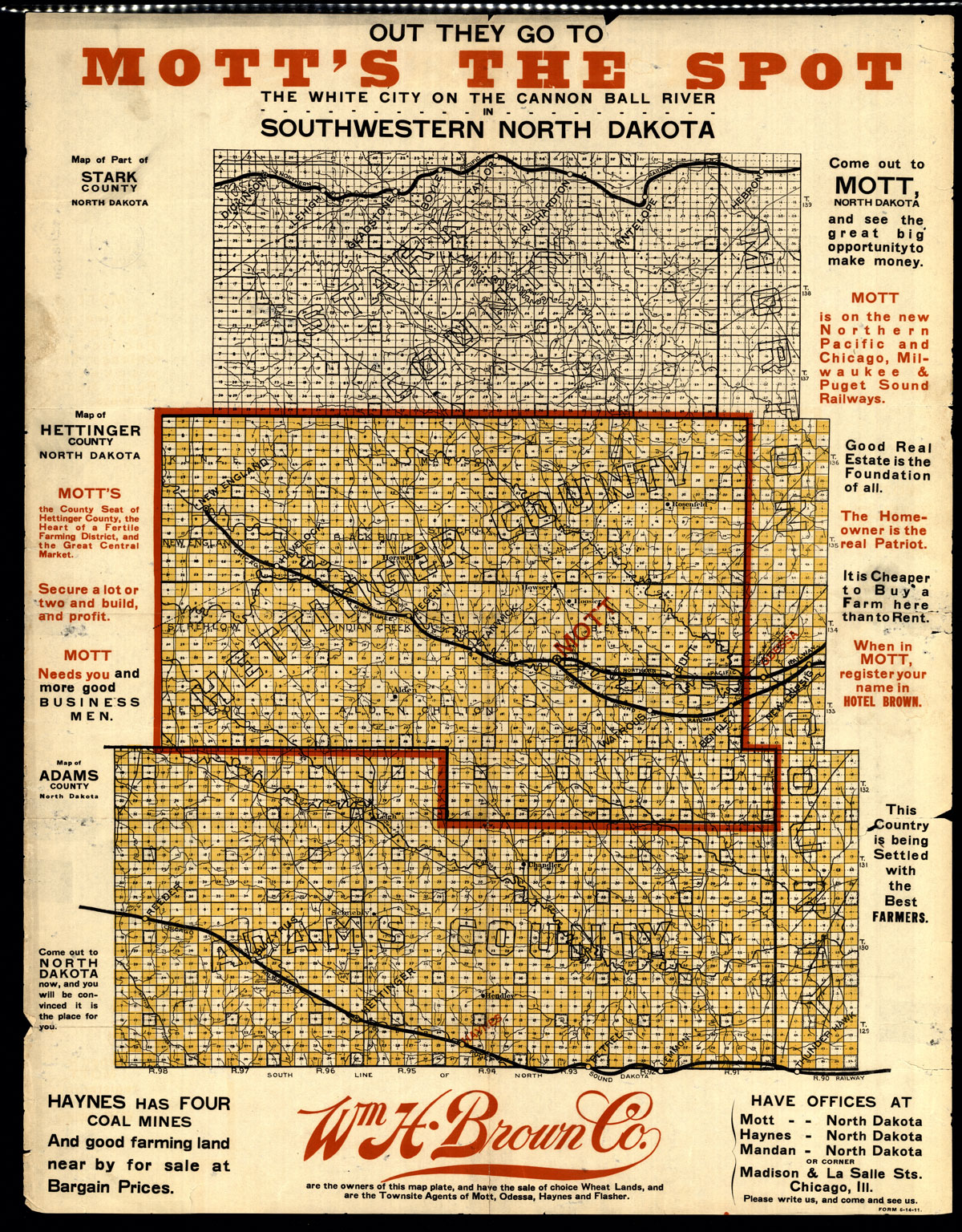
“Out They Go To Mott’s the Spot,” 1903-1911. SHSND SA OCLC 867736855
Perhaps the most over-the-top advertising scheme took place in fall 1915 when Gov. Louis Hanna issued a proclamation urging citizens to come together to promote the state during North Dakota Appreciation Week, Nov. 14-20.
Schoolchildren wrote essays about the benefits of living here. Ministers preached sermons extolling North Dakota’s virtues, and newspaper rhetoric reached hyperbolic heights. Langdon’s Courier-Democrat said the initiative promised the “greatest publicity ever secured by any commonwealth since Noah built the ark.” Pembina’s The Pioneer Express proclaimed that “the cream of creation” was to be found in North Dakota, which The Bismarck Daily Tribune declared “an empire in the making.”
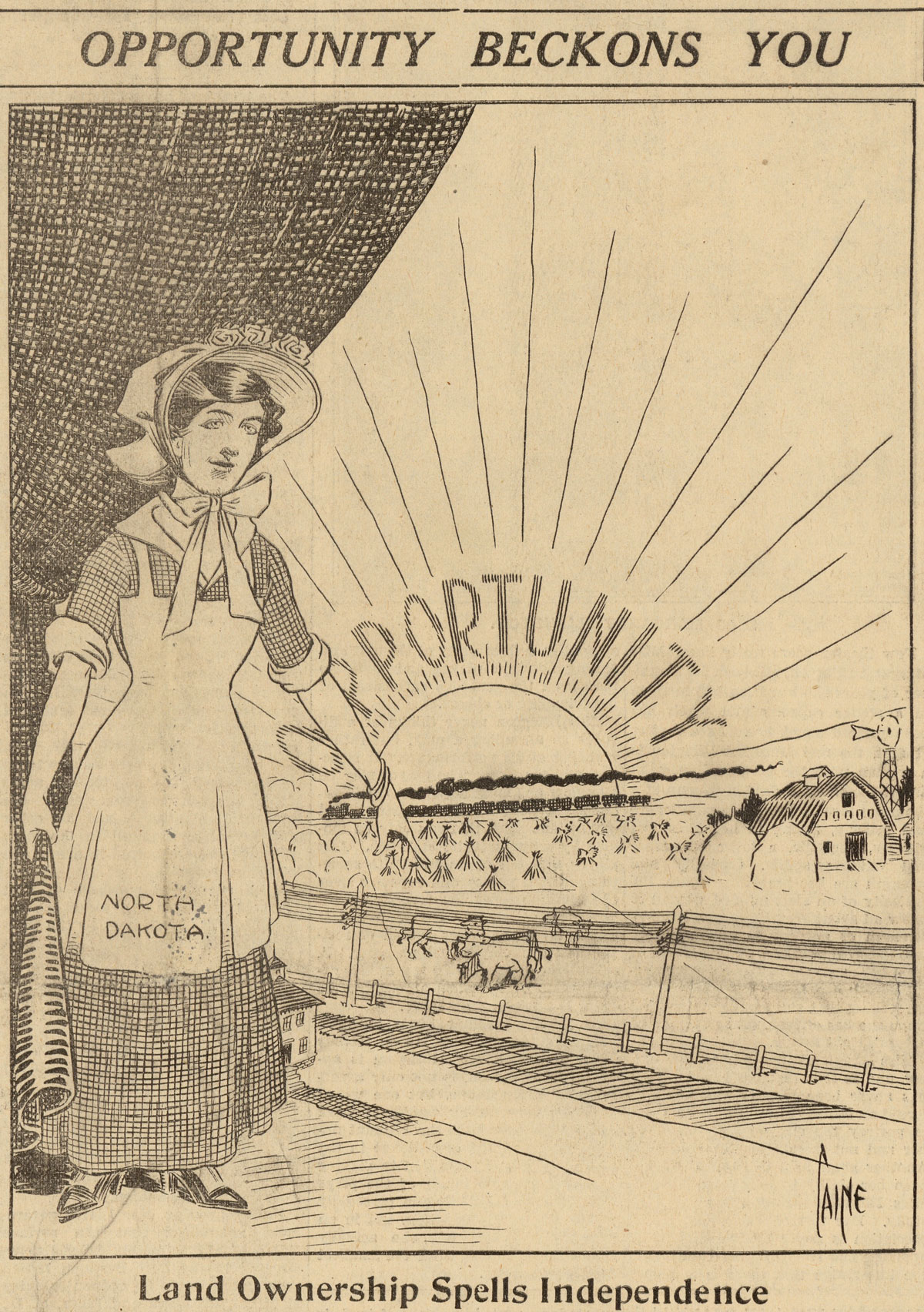
This editorial cartoon published during North Dakota Appreciation Week on the front page of the Nov. 14, 1915, Bismarck Daily Tribune assured readers of the opportunity that awaited them.
By the 1920s, with Americans buying cars and hitting the road in numbers, tourists became a key market. A new state Immigration Department established in 1919 “for the special purpose of advertising the state” sought to tempt visitors with appealing travel pamphlets featuring black-and-white images of the thrilling Badlands and Missouri River landscapes a motorist might encounter.
As the century went on, brochures evolved into eye-popping productions featuring highly stylized graphics and bold colors popular in mid-20th century design. In 1952, the Greater North Dakota Association released the 32-page full color booklet “Bountiful North Dakota: Land of Opportunity.” Heralding the state’s history as a “glorious epic of achievement,” the publication showcased North Dakota’s abundant agricultural, energy, and recreational resources, as well as the state’s industrial development. Its pages included a beautifully illustrated North Dakota map by the noted Bismarck artist and poet Clell Gannon.
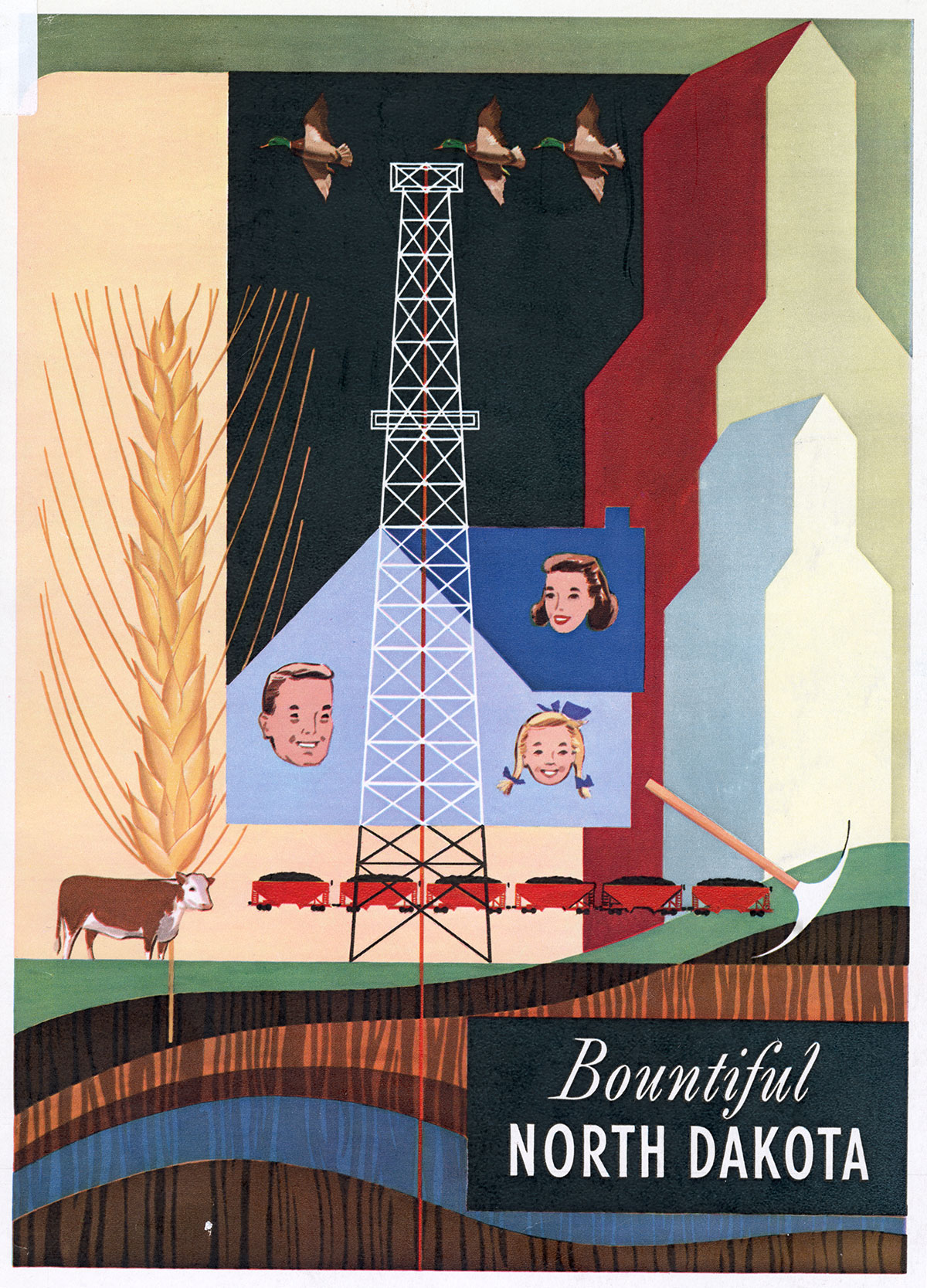
Reflecting the era’s relentless optimism and belief in progress, the Greater North Dakota Association’s 1952 promotional booklet cast North Dakota as a “Land of Happy Homes.” SHSND SA OCLC 07843606
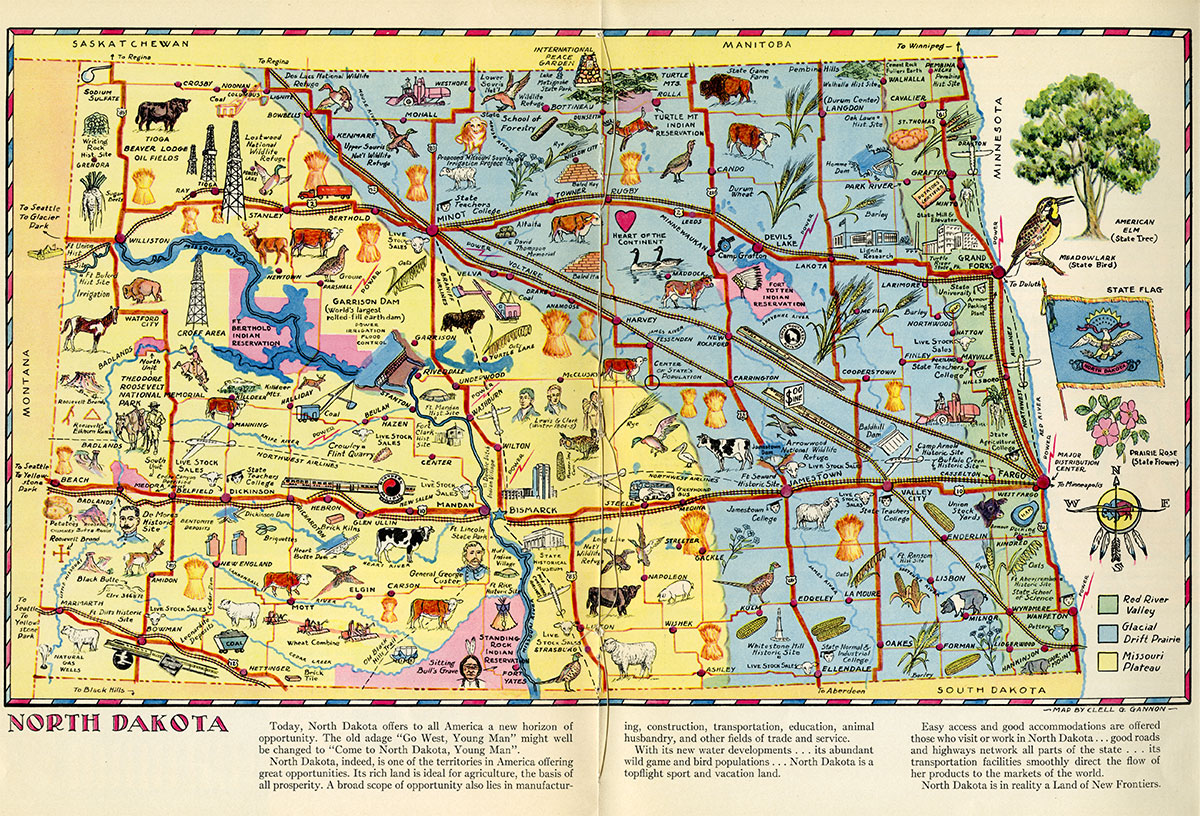
Bismarck artist Clell Gannon illustrated this map for the Greater North Dakota Association’s booklet. SHSND SA OCLC 07843606
Freewheeling folksiness was on full display a few decades later as North Dakota sought to sell the appeal of a place of cowboys, open ranges, and “pretty gals.” The state’s 1970s Marlboro Man-style advertising declared North Dakota “Bigger, Better Country” and promised “room to roam.” Gotta love a campaign that includes a scented page urging you to “scratch leather for North Dakota.” Yee-haw!
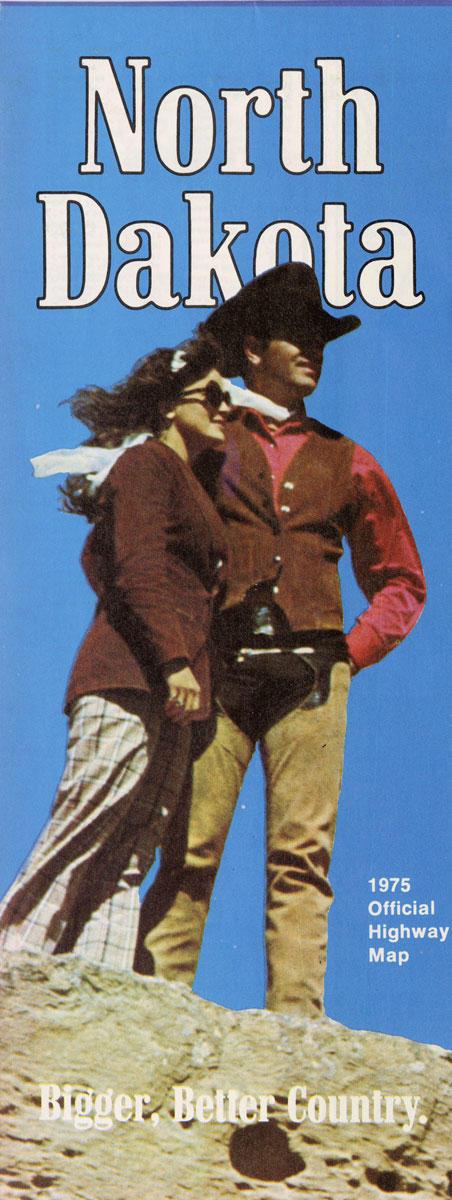
A 1975 highway map produced for the “Bigger, Better Country” tourism campaign. Parks and Recreation, Tourism Division Records, SHSND State Series 31743
But for sheer wit, nothing beats the series of tongue-in-cheek billboards erected in the 1980s. Sporting messages like “Welcome to North Dakota—Mountain Removal Project Completed” and “Stay in North Dakota—Minnesota is Closed this Week,” the billboards poked fun at common North Dakota tropes, attracting national media attention.
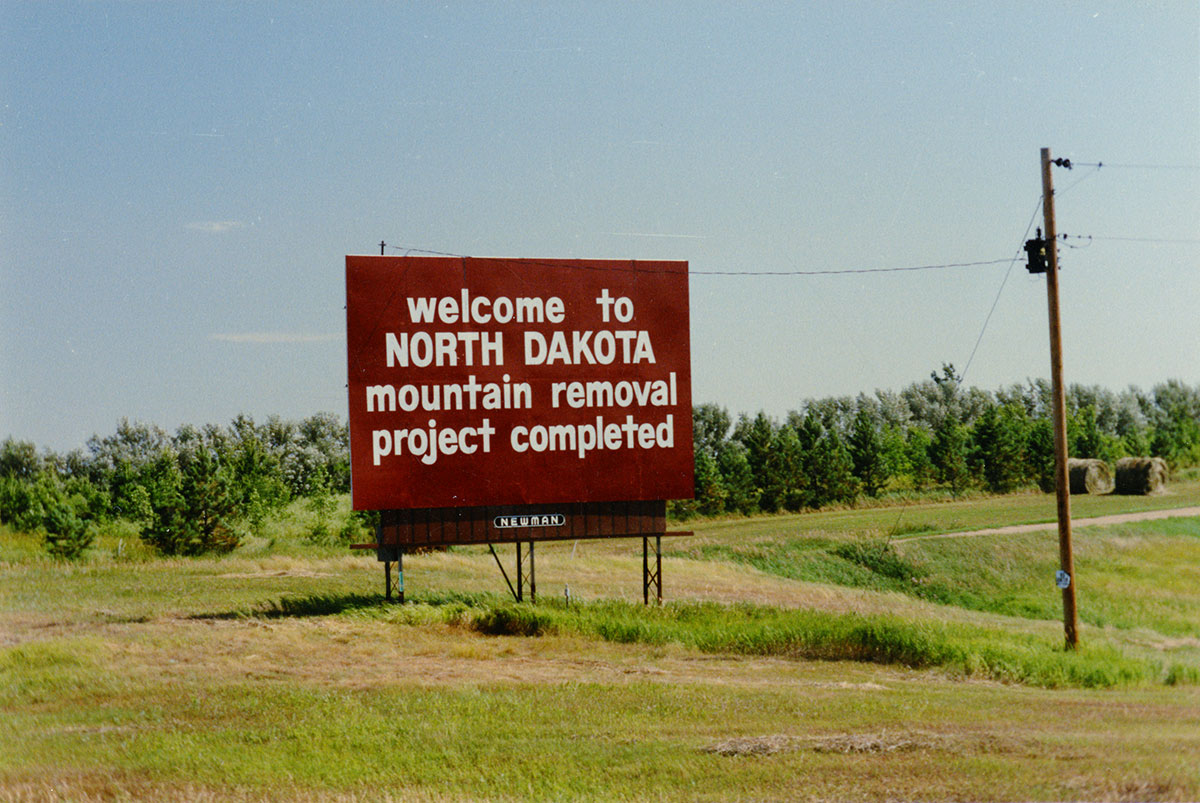
“Welcome to North Dakota—Mountain Removal Project Completed,” circa 1987. SHSND SA 11140-00170
Fast forward to today. Groups like the North Dakota Native Tourism Alliance promote cultural experiences at tribal lands across the state, from museums and buffalo ranches to casinos and powwows. North Dakota has also added some major star power to its arsenal. In recent years, “Transformers” star and Minot native Josh Duhamel has served as a tourism ambassador for the state, spotlighting the good times to be had on North Dakota’s open roads, at its cultural sites, or teeing off at our top-flight golf courses. In 2025, Tigirlily Gold, the musical duo from Hazen, collaborated with ND Tourism on the anthem “Call it Home (A Song for North Dakota).”
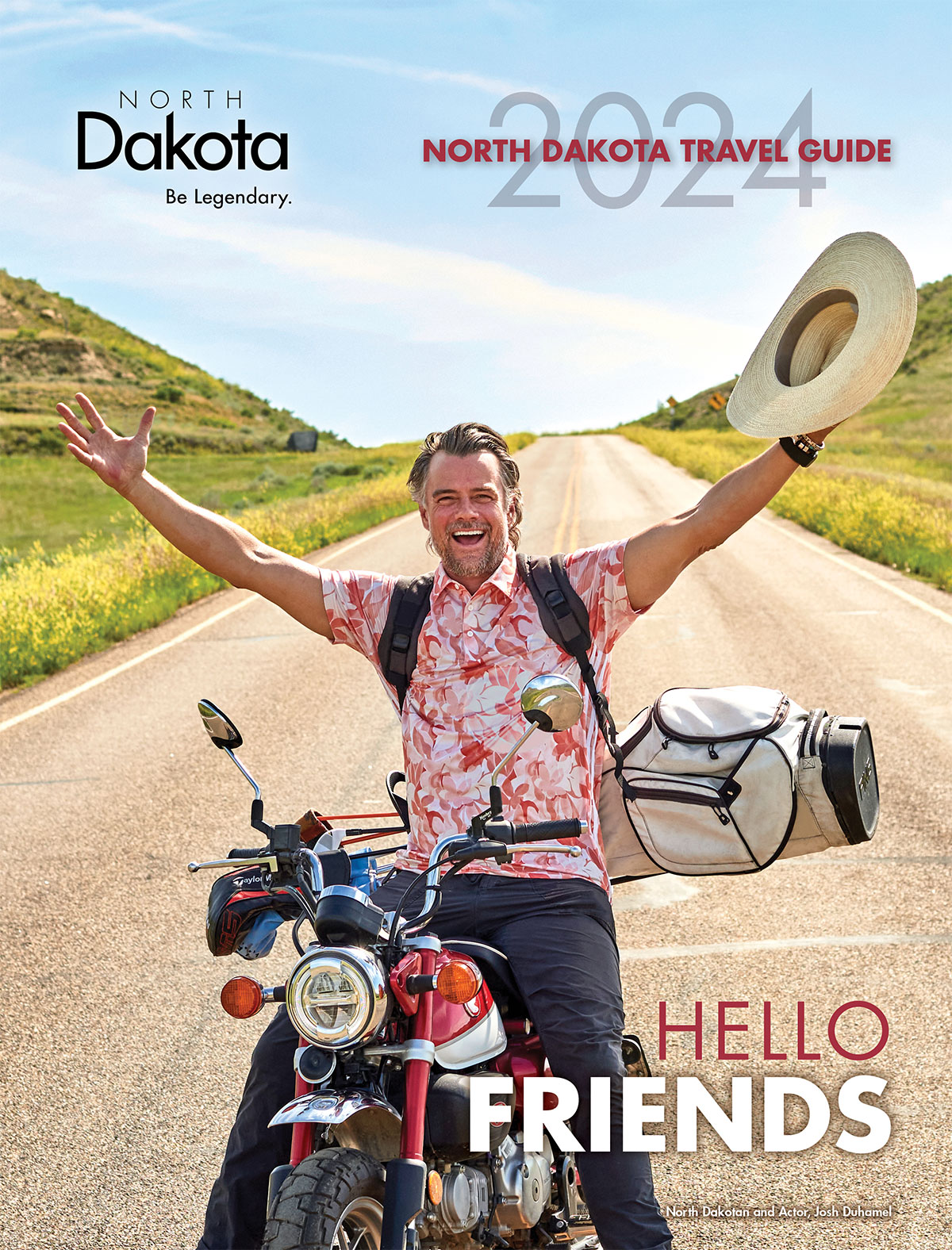
Actor Josh Duhamel lives it up on the cover of the 2024 North Dakota Travel Guide. North Dakota Tourism
As much as things have changed, some things have remained remarkably the same. Case in point: The Department of Commerce’s “Find the Good Life in North Dakota” initiative, not unlike the letter-writing campaigns used during the early days of statehood, draws on “community champions” to connect with prospective residents. After all, when it comes to selling the state, North Dakota’s greatest resource has always been its people.

“Find the Good Life in North Dakota,” 2024. Department of Commerce