




State Historical Society of North Dakota staff began working on content for the new Military Gallery in summer 2024. I wanted to share a few things that I learned as I dig into this ongoing project. Some of these things made me wonder, “How did I not know this already?” But if I didn’t know them, perhaps others would find them as fascinating as I do.
1) The Rough Rider State?
Many North Dakotans volunteered to serve in the 1898 Spanish-American War. But according to Theodore Roosevelt’s book, “The Rough Riders,” only three North Dakotans served with him in the 1st United States Volunteer Cavalry (better known as the Rough Riders): Jesse Langdon of Fargo, William T. de Zychlinski of Bismarck, and Frank Kania of Jamestown.
The majority of the Roosevelt’s troops were men from Southwestern states and territories like Texas, Indian Territory (now Oklahoma), and New Mexico. Most North Dakota men served with either the 1st North Dakota Volunteer Infantry (today’s North Dakota National Guard) or the 3rd U.S. Volunteer Cavalry (nicknamed Grigsby’s Cowboys). While the 1st ND Volunteers sailed to the Philippine campaign and the Rough Riders charged up San Juan Hill, Grigsby’s Cowboys never made it out of the continental United States. The regiment stalled at Camp Thomas in Chickamauga, Georgia, suffering from typhoid and dysentery and never seeing combat.
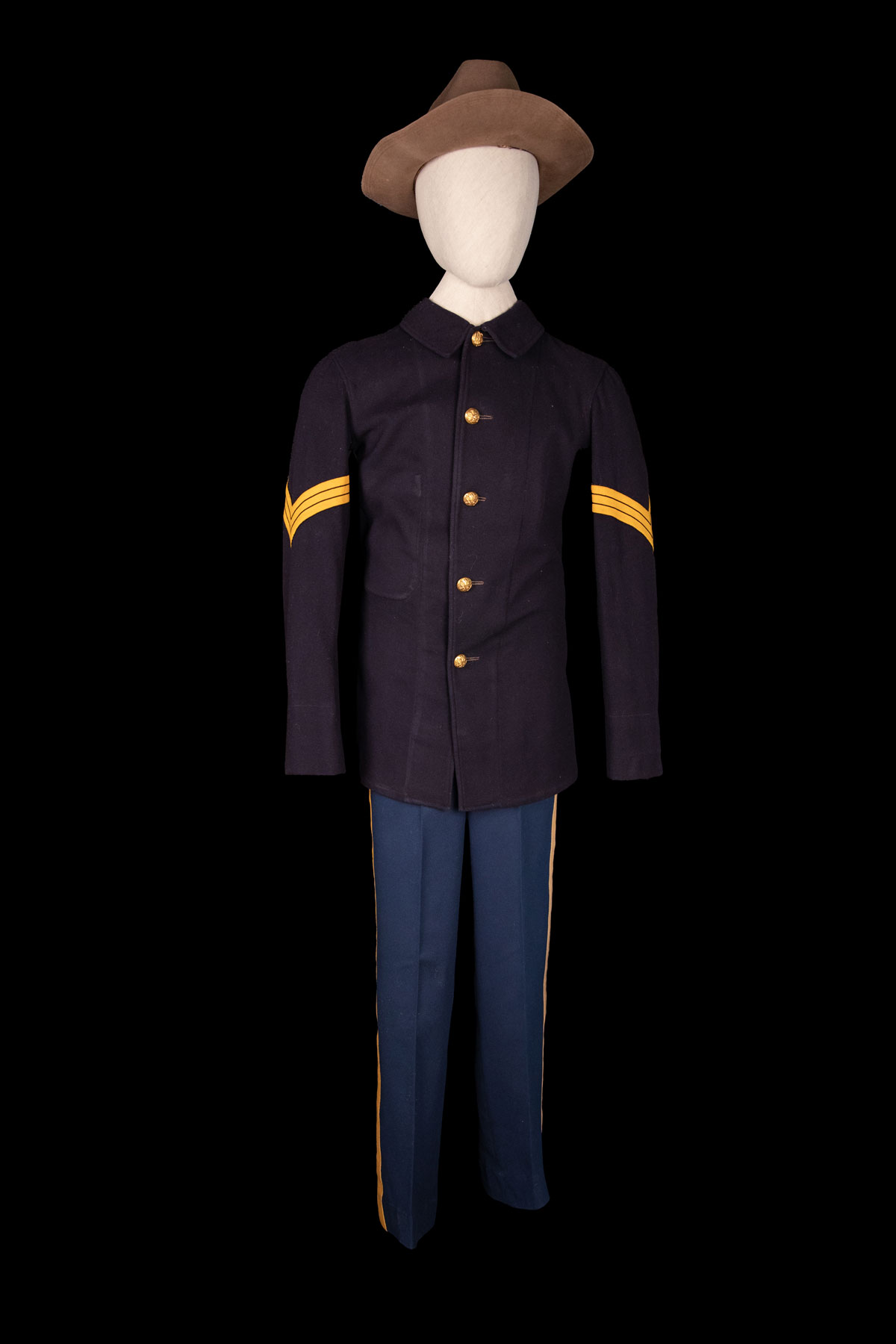
Uniform of Leslie Simpson, 3rd U.S. Volunteer Cavalry Regiment (Grigsby’s Cowboys). Simpson, of Dickinson, was serving as state’s attorney for Stark County when he enlisted. SHSND 6463.1-.2
2) The Mock Battle of Manila, Aug. 13, 1898
“The battle of Manila is a matter of history,” wrote Maj. Frank White to his family about his participation in the battle. “It was rather disappointing as they only sent four vessels in and they did but little firing. I expected to see the whole fleet go at them.”
White, from Valley City, along with the rest of the 1st North Dakota Volunteer Infantry arrived in Manila, Philippines, 13 days earlier and participated in the battle marking the end of the Spanish-American War. Unknown to White, and nearly all the American soldiers, the battle was carefully staged between U.S. and Spanish commanders. Spanish troops were under siege in Manila with Filipino forces surrounding the city and the U.S. Navy blockading Manila Bay. Rather than surrender to Filipinos, who had been under Spanish rule for some 300 years, Spain wanted to save face and entered secret negotiations with the U.S. commanders. On the morning of Aug. 13, 1898, the staged bombardment of Manila commenced and lasted a matter of a few hours with minor casualties. That December, Spain would cede the Philippines to the U.S, directly leading to the Philippine-American War the following year. The 1st North Dakota Volunteers returned to the U.S. in August 1899, and White went on to serve as governor of North Dakota. The Philippine-American War finally concluded in 1902, but the Philippines remained a U.S. territory until 1946.
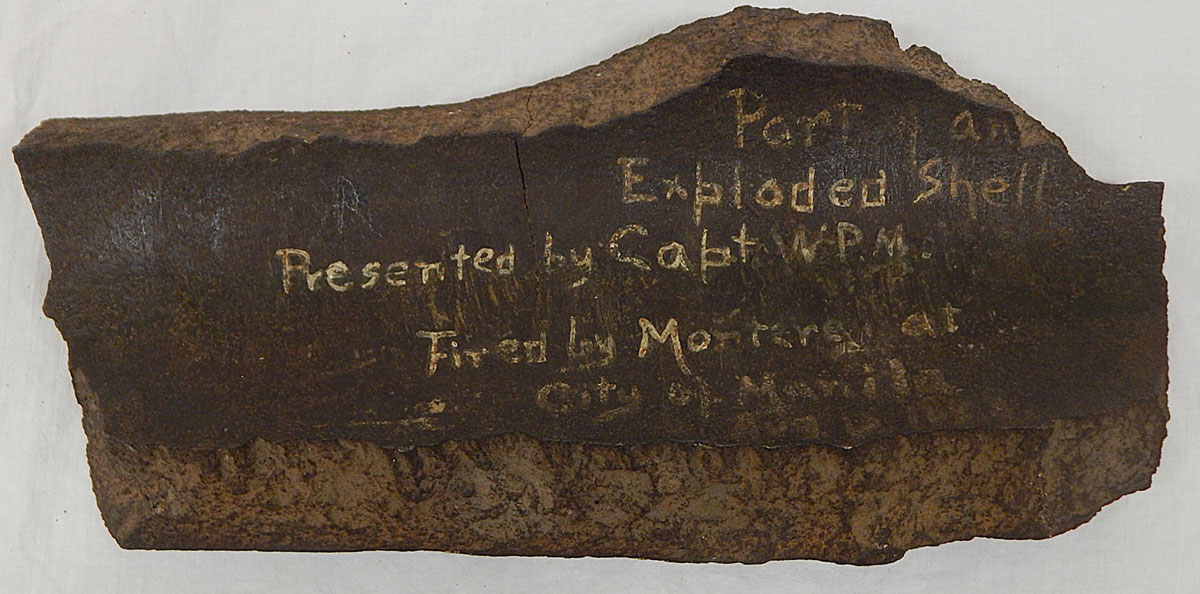
Artillery shell fragment collected by Capt. William P. Moffet at the Battle of Manila. The inscription reads: “Part of an Exploded Shell. Presented by Capt. W.P.M. Fired by [the USS] Monterey at City of Manila, Aug. 13, 1898.” SHSND 2886
3) Dec. 7 … and Dec. 8, 1941
Radioman 3rd Class Don Sjoblom of Bismarck stood on the gangway of the USS Dobbin when the air raid on Pearl Harbor started. At the time, Hawaii was still a U.S. territory. Ten hours later, but across the international date line, another North Dakotan, Staff Sgt. Walter F. Wheeling of Plaza, stationed at Nichols Field near Manila, learned about the bombing of the U.S. air base at Clark Field, 65 miles north of the capital city. Most Americans will never forget Pearl Harbor, but perhaps many do not realize multiple other U.S. territories in the Pacific Ocean besides Hawaii suffered the same fate. Japan targeted Guam, Midway Island, Wake Island, and the Philippines in the same 12-hour period.
What I never knew is the number of lives lost in the Philippines during World War II. Wheeling survived the Bataan Death March following Japan’s invasion of the Philippines, but thousands of soldiers—American and Filipino—perished. Throughout the course of the war, it is estimated between 500,000 and one million civilians lost their lives in the Philippines. While civilians born in Hawaii were considered U.S. citizens, Filipino civilians were not. An explanation of this is a dive into American imperialism we don’t have time for here, but the loss of life in an American territory during World War II is staggering.
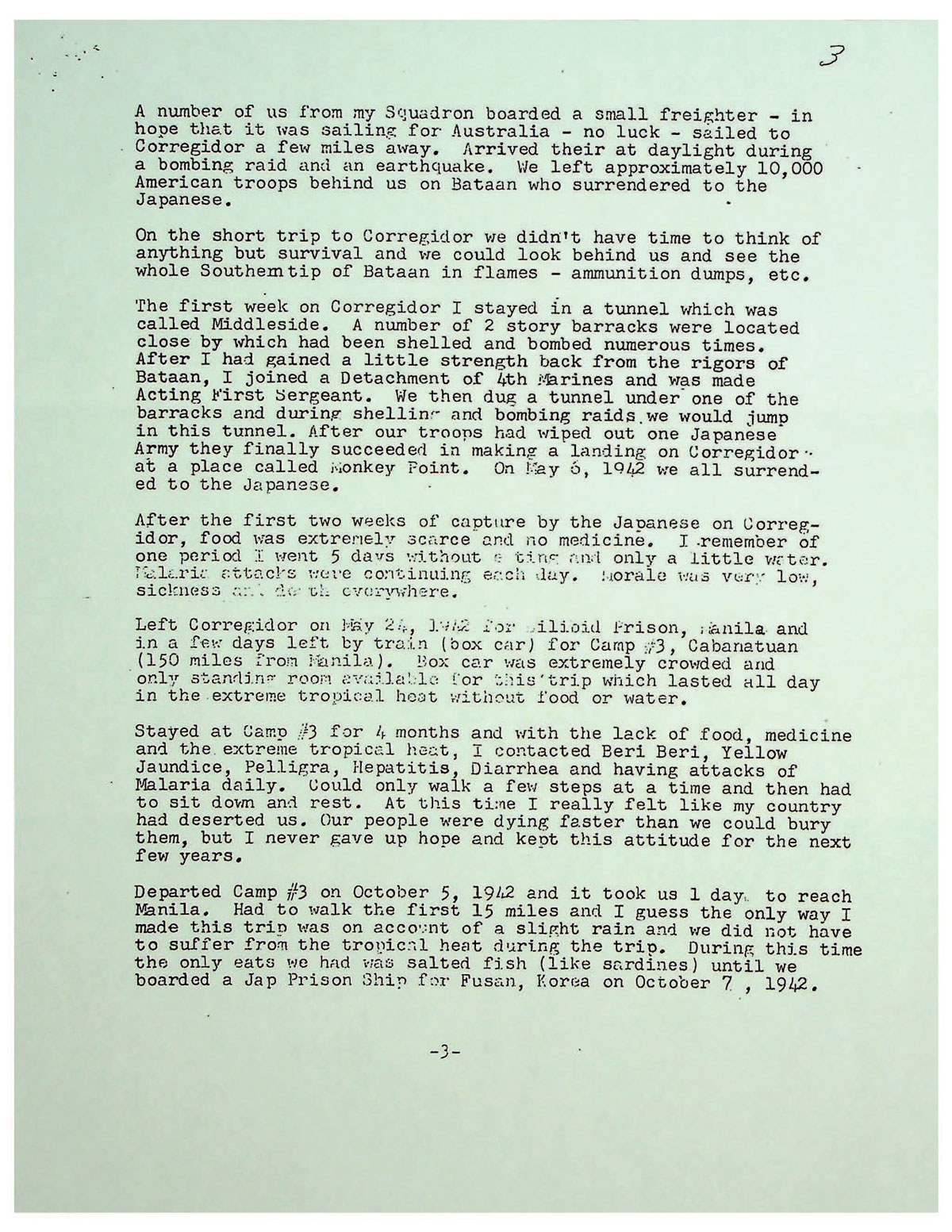
A page from Staff Sgt. Walter F. Wheeling’s World War II reminiscences. Read more at FiNDhistory. SHSND SA 10873-01382
There is always something more to learn about history. I am grateful to the North Dakotans who have entrusted us with the stories of their service. Knowing about these events is one thing, but learning about them through the letters, reminiscences, and physical mementos of North Dakotans creates a deeper connection to our shared past.